The sound of a door opening
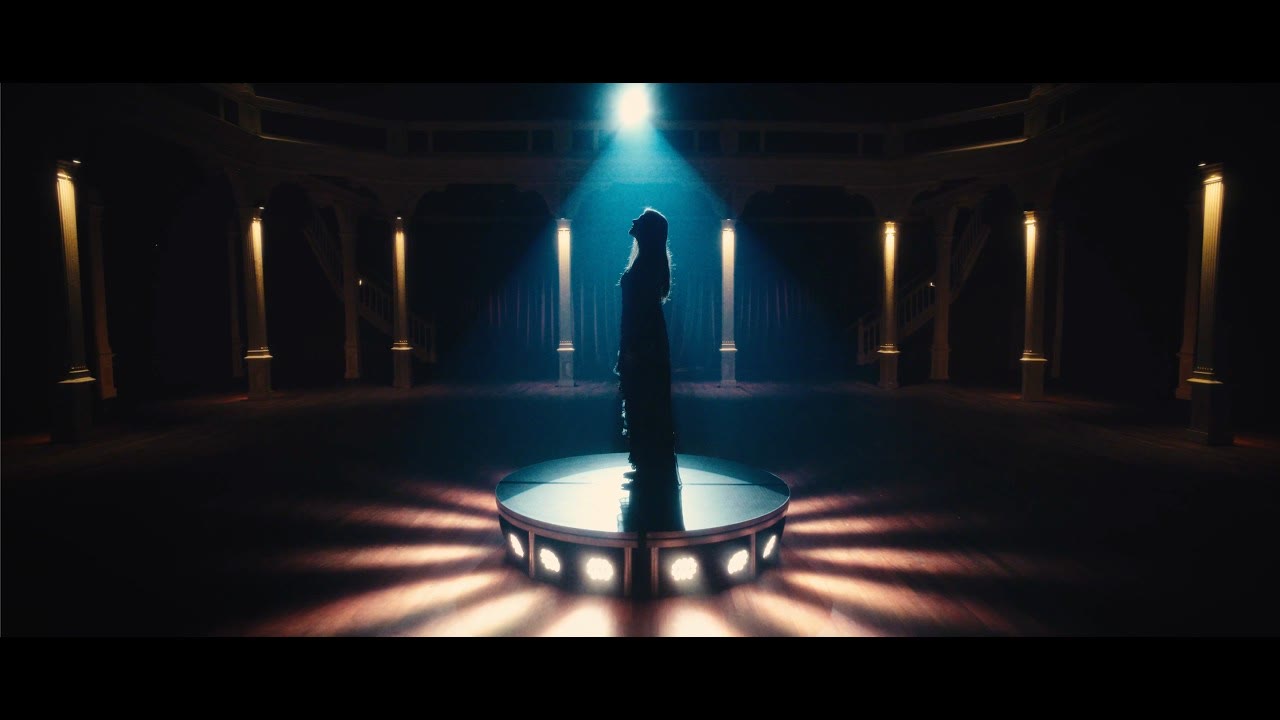
There is a moment in “Run ↗” when Floor Jansen seems to step out of the architecture built around her.
The song is direct, muscular and restless. Its guitars do not arrive beneath her as scenery; they move with her. Her voice still possesses the scale that made her one of symphonic metal’s defining singers, but the performance is less about occupying a vast fantasy world than about refusing to remain inside somebody else’s shape.
Jansen has described “Run” as a song about no longer making yourself smaller to fit a form that was never yours. It is an unusually revealing statement from a vocalist who has spent much of her adult life singing inside powerful collective identities: first After Forever, then ReVamp, then Nightwish.
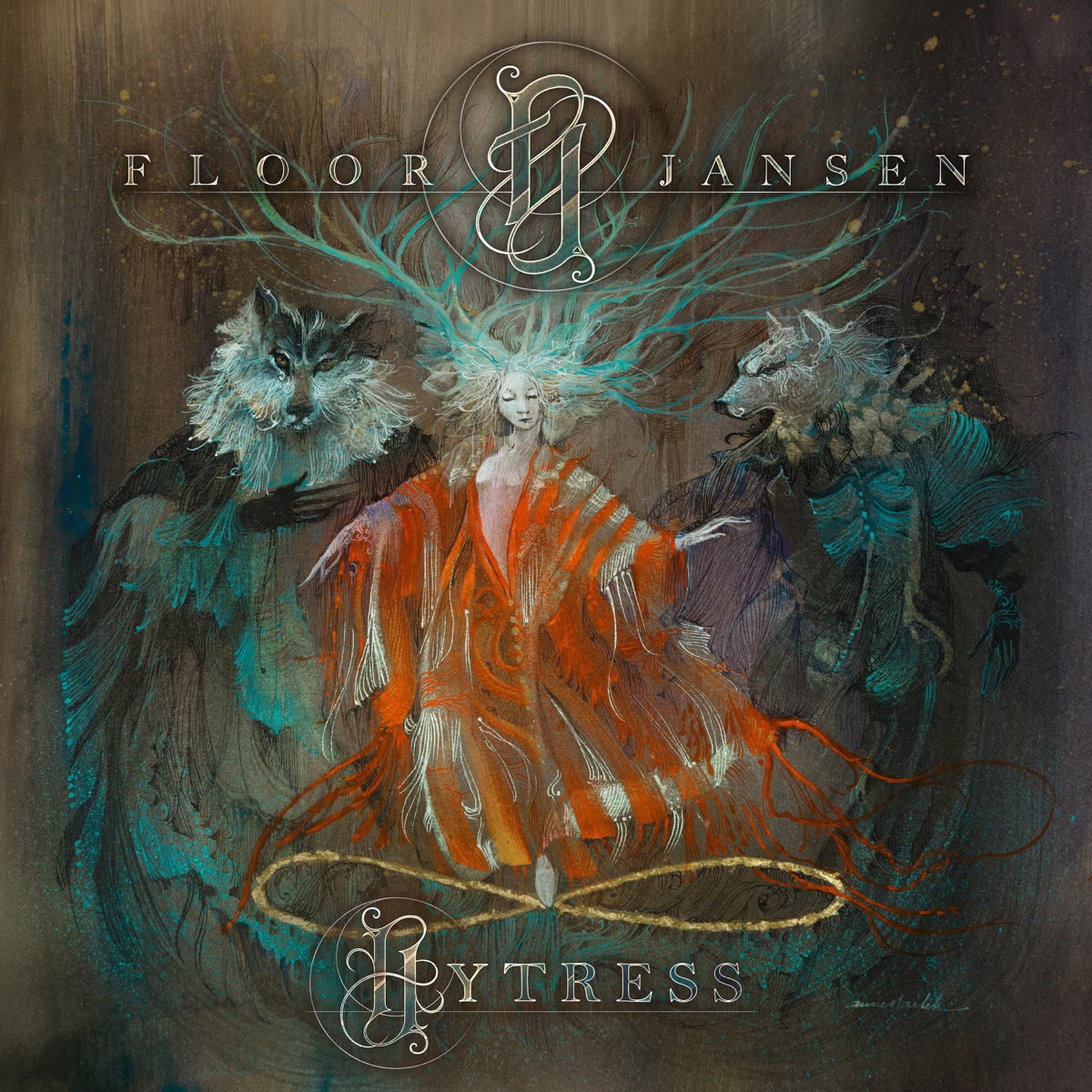
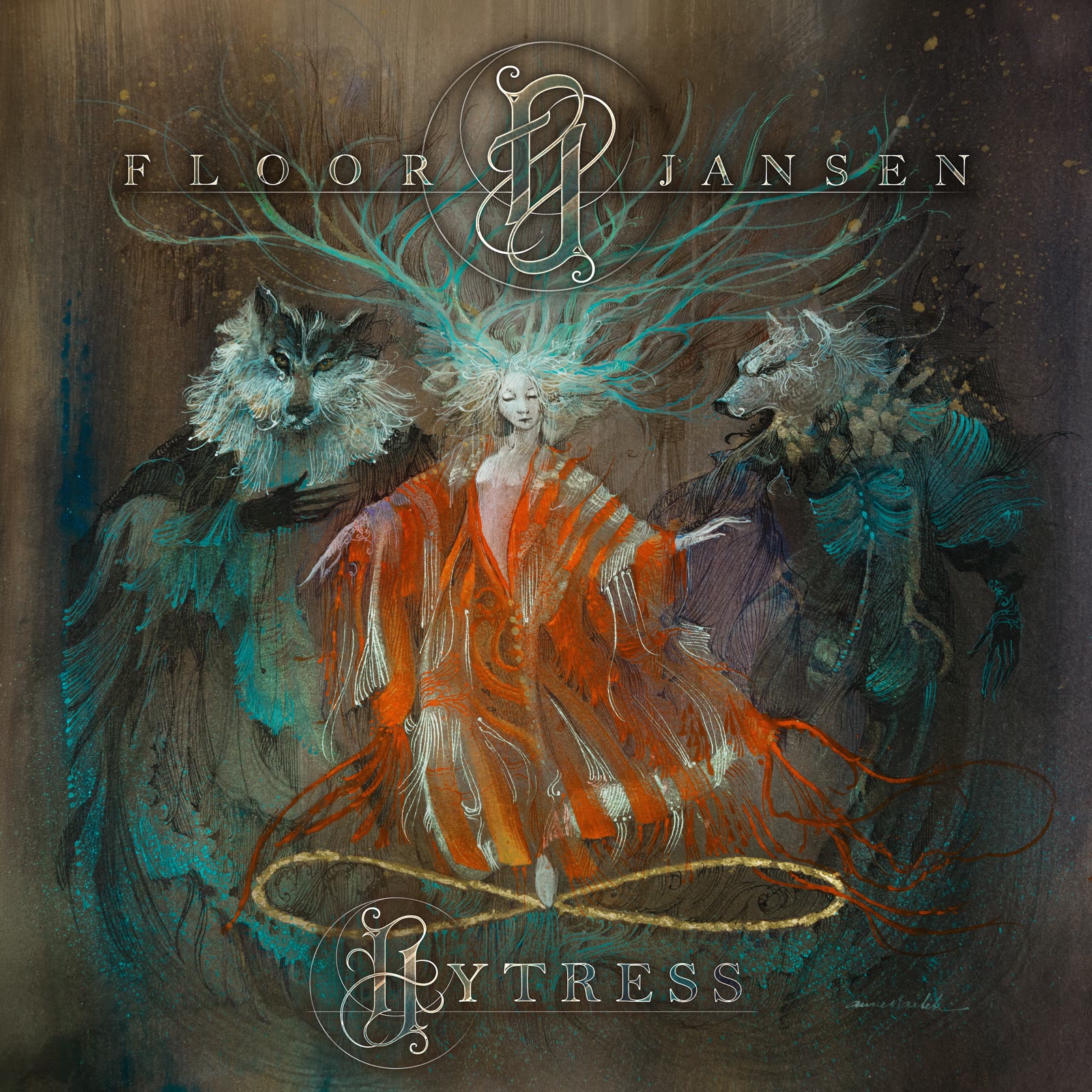
Now, as she prepares to release “Hytress” on January 15, 2027, Jansen is entering the most self-defining period of her career. The album follows her 2023 solo debut “Paragon ↗”, but it does not simply continue that record’s pop-rock openness. Its first three singles, “Run,” “Bring Me Silence ↗” and “Everything Is Moving On ↗”, suggest a sharper, heavier and more compact direction, one that reconnects her with metal without attempting to recreate Nightwish.
That distinction matters. Jansen is not trying to become the frontwoman of another grand machine. She is learning what happens when the machine is hers.
Before the spotlight, there was a teenager in a musical
Floor Jansen’s story began not with a record deal or an arena stage, but with performance itself. When she was around thirteen or fourteen, she took part in a high-school production of “Joseph And The Amazing Technicolor Dreamcoat”. She shared the role of the narrator with two other girls, but the experience made something clear: she wanted to perform.
The revelation is revealing in retrospect. Jansen’s voice has always carried a theatrical instinct, not merely in its power but in its ability to inhabit emotional scale. She can sing with the physical force of a metal vocalist, yet she also understands drama: how a phrase should rise, how a word should be held back, how silence can make the next note feel larger.
She came of age in the Dutch metal scene and joined the band that would become After Forever at sixteen. The group’s early work placed her inside the emerging European gothic and symphonic metal movement, but it also gave her a songwriting education in public. “Prison Of Desire”, the band’s first album, remains a formative document precisely because Jansen can now hear how young they were when they made it.
“I was 18 when I recorded it, so we didn’t know anything about writing, about recording, about singing,” she later said of the album. “But your first is your first. And that makes it very, very special.”
That mixture of embarrassment and tenderness is central to Jansen’s character. She is not interested in pretending that growth happens cleanly. Her earliest work matters because it contains the person she was before technique, fame and expectation became inseparable from her name.
After Forever became increasingly ambitious, combining progressive structures, heavy guitars, orchestration and contrasting vocal approaches. But when the band entered a period of uncertainty and eventually ended, Jansen did not simply wait for another institution to give her a role. She created ReVamp, a project that allowed her to write and steer the music herself. Later, she also developed Northward with Pagan’s Mind guitarist Jørn Viggo Lofstad, exploring a more straightforward hard-rock language. Those projects were important because they established a part of Jansen’s identity that could be obscured by Nightwish: she was not only an interpreter of other people’s compositions. She had been a songwriter and musical decision-maker long before becoming the voice of one of metal’s most celebrated bands.
The Nightwish years were extraordinary, and not entirely hers
Jansen joined Nightwish during the “Imaginaerum” touring cycle in 2012, initially as a replacement for Anette Olzon. She became a permanent member the following year and recorded three studio albums with the band: “Endless Forms Most Beautiful” in 2015, “Human. :II: Nature.” in 2020 and “Yesterwynde” in 2024.
For many listeners, those years represented the full arrival of Jansen’s voice. She could move from a clean, almost conversational intimacy to a metallic roar, from operatic resonance to a rough-edged belt, without sounding as if she were choosing between separate singers. Onstage, she became the human centre of a band built around monumental arrangements and elaborate conceptual worlds.
But Nightwish was, by design, not a democracy of songwriting in the conventional sense. Keyboardist Tuomas Holopainen remained the principal composer. Jansen has spoken openly about that division of labour: she did not write the band’s songs, though her interpretations, harmonies and vocal choices helped turn demos into performances.
“I don’t write in Nightwish,” she explained in a 2024 interview. “I did that in my previous bands and I have a solo career next to Nightwish where I do write.”
There is no resentment in that observation. Jansen has repeatedly acknowledged the special nature of Nightwish’s music and the extraordinary freedom Holopainen’s compositions gave the band. She also understood that the experience was unusual in her own career. The Nightwish period was the exception: the era in which she became the most visible member of a world-renowned band while having the least control over the underlying compositions.
That tension is not a scandal. It is the emotional foundation of “Hytress”.
A body forced her to reconsider time
The past several years have placed Jansen’s artistic life beside the most intimate realities of being human. In 2022, she announced that she had breast cancer. She later shared that surgery had removed the cancer and that it had not spread.
Then came pregnancy and the birth of her second daughter, Lucy, in 2023. These events did not merely create biographical context around her music; they changed her relationship with work, energy and the future. During the making of “Yesterwynde”, Jansen was pregnant, recovering from cancer and caring for a young family. She described herself as exhausted and acknowledged that she was less present during the recording process than she had been on previous Nightwish albums.
“I was pregnant, and before that there was the cancer, and then I had my baby and I was just really, really fucking tired,” she said.
The sentence is blunt, but it is not self-pitying. Jansen has never presented motherhood or illness as a melodramatic explanation for her choices. Instead, she has described the collision of those experiences with the honesty of someone whose body finally refused to be treated as an infinite resource.
Nightwish had already announced a live hiatus in 2023. Jansen said at the time that the decision was collectively supported, although she would have preferred to continue performing. A world tour, she pointed out, requires every member to be present night after night, at full capacity.
That understanding of performance, not as a vague promise, but as a physical commitment, is essential to reading her present. Jansen is not walking away from the stage. She is trying to build a life in which the stage no longer consumes everything around it.
From “Paragon” to “Hytress”
The first solo chapter began before the Nightwish split. Jansen’s participation in the Dutch television programme “Beste Zangers” exposed a broader audience to her versatility, allowing her to sing outside the metal framework that had defined her public image. It also gave her permission to explore material that was not expected to culminate in a symphonic-metal climax.
“Paragon”, released in 2023, was the result: melodic, accessible and emotionally open, with songs such as “Fire ↗” and “Me Without You ↗” presenting a different kind of strength. The album did not ask Jansen to prove that she could still sing high or loud. It asked whether she could be heard without the armour of orchestral bombast.
She has said that “Paragon” was an experiment in discovering how her voice worked outside the huge arrangements associated with Nightwish. With “Hytress”, the experiment has become more decisive. The new album is intended to be heavier, but not a copy of Holopainen’s writing or a substitute Nightwish record.
“I wanted to find a heavier, more metal sound that is 100% me, but not like Nightwish,” Jansen said.
That means shorter forms, more compact songwriting and a more immediate relationship between guitar, rhythm and voice. “Bring Me Silence,” released in August 2026, is built around down-tuned guitars and layered vocals, but its drama is concentrated rather than panoramic. The song does not need a fictional universe to make its emotional point. It sounds like a woman demanding room to think.
“Run” opened the door. “Bring Me Silence” showed the weight behind it. “Everything Is Moving On,” released on October 23, arrived in the shadow of an even larger change. The title now reads almost like a statement of intent, but its meaning reaches beyond one band or one announcement. Jansen has described the song as being about time, change and recognising when it is necessary to move forward.
Its timing made the emotional connection unavoidable: on October 15, Nightwish and Jansen announced that they had parted ways after fourteen years. The official statement called the decision mutual and necessary for both sides’ future ambitions. Jansen wrote that endings create new beginnings and that her solo career would now receive her full attention.
There is sadness in that language, but also discipline. She does not reduce fourteen years to a mistake. She does not need to diminish Nightwish in order to make space for herself.
No villain, no verdict, only a life changing shape
In a November 2026 interview with Dutch outlet NU.nl, Jansen compared the separation to the end of a relationship. People go through closeness and distance, she explained; sometimes they can no longer navigate the difficult periods together. At that point, continuing is no longer honest.
That explanation should be allowed to remain human rather than converted into another chapter of the familiar vocalist debate. Jansen’s career is not a courtroom in which fans must decide who was right. It is the story of a woman who joined a band in her twenties, became a mother, faced cancer, endured the physical costs of touring and recording, and discovered that the identity she had built inside a collective could no longer contain everything she had become.
Her public image has often been defined by extremes: the towering singer, the impossible range, the symphonic-metal powerhouse. But the more compelling picture is quieter. It is Jansen listening to her own work and asking what remains when the orchestra falls away. It is the songwriter who once stepped into a high-school musical and never stopped learning how to inhabit a song. It is the mother who understands that time is not abstract. It is the survivor who knows that a future cannot be postponed indefinitely.
The vocal power remains, of course. On “Run,” she sounds liberated by motion. On “Bring Me Silence,” she sounds steadied by restraint. On “Everything Is Moving On,” she sounds as if she has accepted that change is not a single dramatic event but a series of choices made while life continues around you.
Jansen has called “Paragon” the best record she had made because it was the latest expression of everything she had learned. “Hytress” may carry a different kind of importance. It is not simply the newest record. It is the first to arrive with no larger band identity standing behind it, no inherited mythology to complete and no old argument to win.
When the “Hytress” tour begins in Antwerp on January 14, 2027, Jansen will step onto stages that are smaller than the grandest Nightwish rooms but potentially more revealing. The songs will have to hold without the old scaffolding. Her voice will not be less powerful for that. It may, finally, be more fully hers.
The sharper solo era is not a rejection of the past. It is what happens when the past has done its work, when After Forever has taught you to begin, ReVamp has taught you to lead, Nightwish has taught you to fill the sky, and life has taught you that the sky is not the only place a voice can belong.