
For the third time in its extraordinary history, Nightwish stands at a crossroads. The voice that helped define its most recent era is gone, a new album is on the horizon, and somewhere out there is a singer facing perhaps the most intimidating opportunity in symphonic metal.
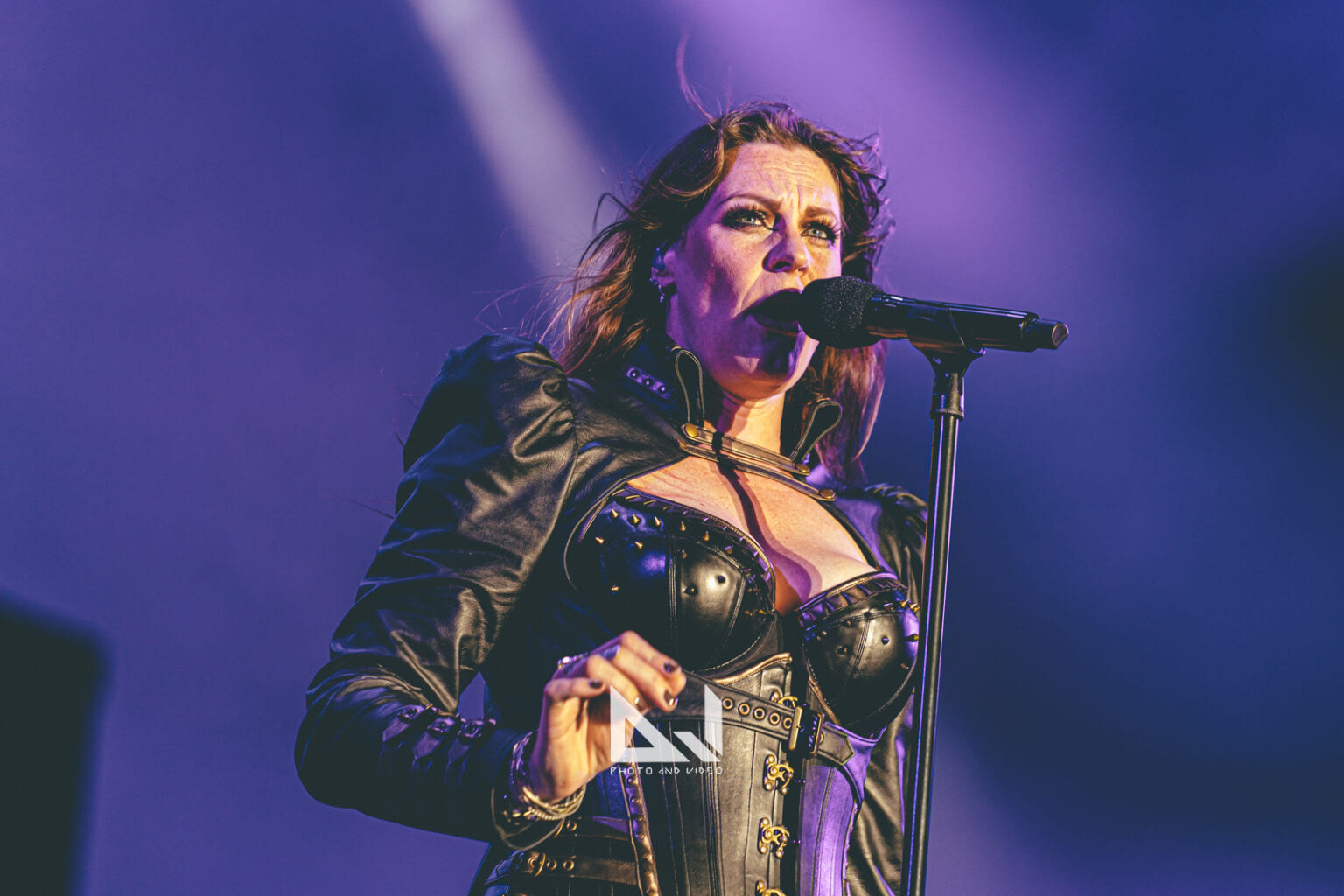
On October 15, 2026, Nightwish announced that Floor Jansen, the Dutch vocalist who had fronted the Finnish giants for fourteen years, was leaving the band. The separation was described as mutual, with both sides emphasizing their respect for one another and their determination to pursue different artistic futures.
After careful consideration, we have, in mutual agreement, decided to part ways. This decision is necessary and important to us and our future ambitions.
The band offered no elaborate explanation and made no attempt to disguise the significance of the moment. Nightwish would continue, entering the studio in 2027 to record its eleventh album. Floor, meanwhile, would devote herself to her solo career, including her forthcoming album Hytress.
For millions of fans, the announcement reopened a familiar wound. Nightwish has survived seismic changes before, but each departure has carried the uncomfortable question of whether the music could ever feel the same again.
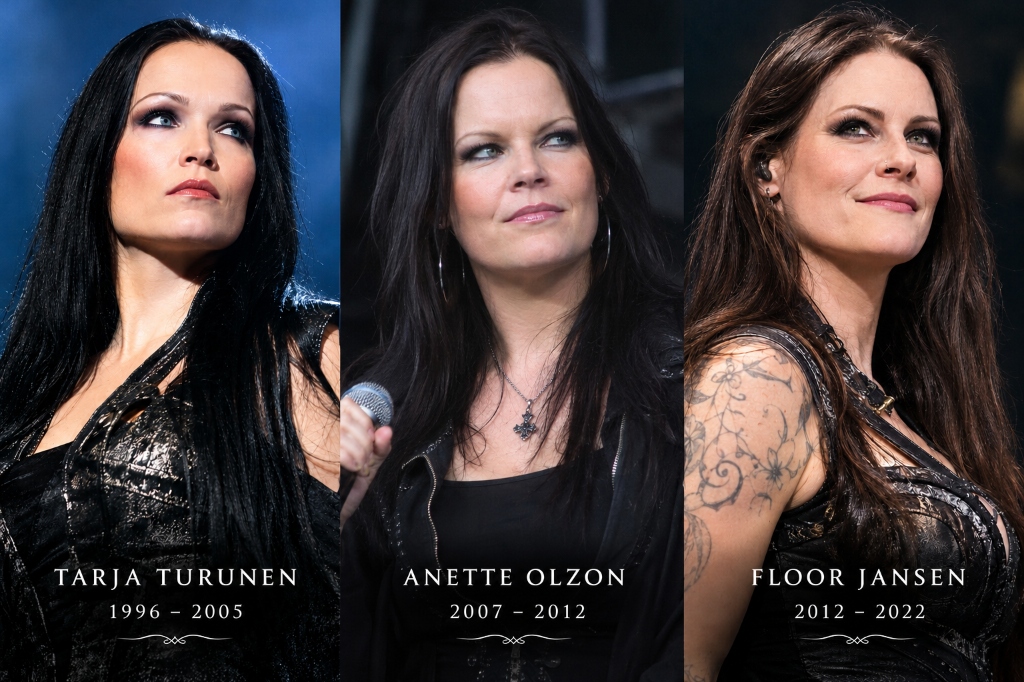
Tarja Turunen’s dismissal in 2005 ended the band’s foundational era, when her operatic soprano helped create a sound that transformed symphonic metal. Anette Olzon’s arrival in 2007 introduced a warmer, more contemporary approach, expanding Nightwish’s melodic vocabulary while dividing portions of its audience. When Floor Jansen stepped in during the troubled Imaginaerum tour in 2012, she seemed to resolve an impossible argument.
She could sing Tarja’s operatic material without merely imitating Tarja. She could deliver Anette’s melodic songs with authority and emotional warmth. And when Tuomas Holopainen began writing specifically for her, she demonstrated that Nightwish could evolve beyond both of its earlier identities.
Albums such as Endless Forms Most Beautiful, Human. :II: Nature. and Yesterwynde revealed a band increasingly fascinated by humanity, natural history, science and the fragile beauty of existence. Floor became an essential part of that expansive musical language.
Replacing her is not simply a matter of finding another impressive soprano.
Nightwish needs someone capable of carrying three decades of music while helping create a fourth era that belongs entirely to her.
That demands range, stamina, emotional intelligence, theatrical presence and an understanding of the strange territory where classical composition meets heavy metal. It also demands something less measurable: the chemistry that allows a vocalist to become part of Tuomas Holopainen’s musical imagination.
Five women present particularly intriguing possibilities. Some have already demonstrated their ability to sing Nightwish’s material. One has literally taken over Floor Jansen’s former role in another band. Another once helped build Nightwish itself.
None has been announced as Nightwish’s next vocalist, and there is no verified indication that the band is considering these particular singers.
But each offers a different answer to the question confronting symphonic metal’s most famous institution.
1. Tsena Koev: The Voice That Could Bridge All Three Eras
Among the less obvious candidates, Bulgarian singer Tsena Koev and her band project of the same name present an especially interesting musical proposition.
Her strongest argument is not simply that she can sing Nightwish songs. It is that her career has been built around the same collision of classical technique, progressive musical complexity, theatrical expression and hard-rock power that makes Nightwish’s repertoire so demanding.
Born in Ruse, Bulgaria, Tsena began her musical education with the violin before developing her abilities as a guitarist and vocalist. Her career eventually brought her into the international Vivaldi Metal Project, where Baroque-inspired compositions, progressive arrangements and heavy guitars require exceptional flexibility from their singers.
She became the project’s first live lead vocalist, participated in The Four Seasons and EpiClassica, and performed on European stages, including the Ancient Theatre of Plovdiv. Her recorded collaborations include Tears to Splendor, featuring Jeff Scott Soto and Mike Portnoy.
It is an unusual apprenticeship for a potential Nightwish frontwoman, but an instructive one.
Vivaldi Metal Project inhabits a world where classical music is not merely decoration placed over metal instrumentation. Its structures, harmonic movement and technical demands are integral to the compositions.
That experience matters because Nightwish has become increasingly sophisticated in its orchestration. A singer approaching the music only as conventional heavy metal risks missing much of what makes Holopainen’s writing distinctive.
Tsena’s vocal identity occupies several overlapping territories. Her background encompasses lower, darker vocal registers, powerful contemporary rock singing and an upper extension reaching into coloratura soprano territory. Music journalists have highlighted her remarkable breadth and her ability to move between different musical styles.
That versatility becomes particularly relevant when considering Nightwish’s back catalogue.
The three established Nightwish singers approached their material from fundamentally different directions. Tarja’s classical foundations gave early compositions their operatic grandeur. Anette’s voice emphasized melodic clarity and intimacy. Floor united those qualities with the muscular projection and dynamic control of an experienced metal performer.
Tsena has already explored those contrasts in her own performances.
Her Nightwish interpretations include Nemo ↗, which she has performed live and recorded as a studio cover, and Our Decades in the Sun ↗, presented in an acoustic arrangement featuring Italian keyboard virtuoso Mistheria.
Perhaps even more revealing is her signature Nightwish medley ↗, which brings together material from the Tarja Turunen, Anette Olzon and Floor Jansen eras. Rather than focusing on a single period of the band’s history, the performance moves between three distinct vocal identities, making it an unusually direct demonstration of the versatility required from a potential successor.
This provides something more meaningful than a single viral performance.
A singer capable of approaching the lyrical elegance of Nemo, the emotional restraint of Our Decades in the Sun and the more forceful material associated with Floor’s era has already begun investigating the central artistic problem a fourth Nightwish vocalist would face.
There is also the matter of professional experience.
Tsena’s musical circle includes Jeff Scott Soto, Mats Levén, Snowy Shaw and Mistheria, musicians whose careers encompass Journey, Yngwie Malmsteen, Therion, Mercyful Fate, Bruce Dickinson’s solo work and numerous other corners of international rock and metal.
These are not merely names attached to a promotional biography. Tsena has recorded and performed within this network, including her Storm in Human Form project and collaborations with Mats Levén. Her duet Erase Me with Jeff Scott Soto reached number one on Bulgaria’s Z-Rock Reynaers Top 30 chart and remained at the top for seven weeks. The achievement demonstrated that her music could connect with rock audiences beyond the relatively specialized world of symphonic metal.
Working alongside powerful, established vocal personalities requires musical confidence. It also creates opportunities to learn how experienced performers handle demanding arrangements, changing musical dynamics and the unpredictable realities of live performance.
One of Tsena’s more intriguing connections to the Nightwish story involves Plamen Dimov, the Bulgarian-born music teacher whose influence on the band’s founding musicians is part of Nightwish history.
Dimov knew Tuomas Holopainen from childhood and taught musicians involved in Nightwish’s beginnings in Kitee. He remains emotionally invested in the band’s future, telling Finnish broadcaster Yle after Floor’s departure that he expected another female singer to bring a new chapter to the group.
Bulgarian National Radio also reports that Dimov has described Tsena as a successor to Nightwish’s musical tradition. That is an artistic endorsement, not evidence of recruitment or an inside connection to the band’s current plans.
The distinction matters, but so does the compliment.
For a singer from a relatively small metal market such as Bulgaria, international recognition is difficult to build. Tsena does not enjoy the global visibility of Tarja, Floor or Noora Louhimo. Her audience is smaller, and much of her work has developed through collaborations and independent projects rather than through the machinery of a major international metal band.
Paradoxically, that could be an advantage.
Nightwish would be gaining a recognizable artistic personality without inheriting an enormous competing brand or the expectations attached to another established frontwoman.
The obvious uncertainty is whether her combination of vocal versatility and collaborative experience would translate into the particular demands of Nightwish’s enormous international productions. Her work demonstrates musical range, but it does not yet constitute a track record of sustaining a Nightwish-sized world tour.
There is another question as well: how much individuality would she bring to new material written specifically for her?
Covering three eras demonstrates adaptability. Defining a fourth would require a more personal artistic statement.
Still, among candidates outside the obvious international superstar circuit, Tsena Koev offers a compelling combination of classical influence, contemporary power, progressive experience and demonstrated familiarity with Nightwish’s contrasting vocal traditions.
Her greatest strength might be precisely what made Floor so valuable: the ability to regard all three eras as musical possibilities rather than competing camps.
2. Angel Wolf-Black: The Woman Who Has Already Replaced Floor Jansen
If replacing Floor Jansen sounds like an impossible assignment, Greek vocalist Angel Wolf-Black has one distinction nobody else on this list can claim.
She has already done it.
Not in Nightwish, of course, but in After Forever, the Dutch symphonic metal band where Floor established herself long before joining Tuomas Holopainen’s musical universe.
When After Forever’s former members reunited for anniversary performances in Tilburg in October 2025, Floor was not part of the lineup. Angel Wolf-Black stepped behind the microphone instead.
The occasion carried enormous emotional weight. After Forever’s albums Prison of Desire and Decipher helped define the early European symphonic metal movement, with their mixture of operatic vocals, death-metal influences, progressive structures and gothic atmosphere.
Those songs were deeply connected to Floor’s identity.
Yet Angel accepted the challenge of singing them with original members Sander Gommans, Bas Maas and Luuk van Gerven, alongside keyboardist Jeffrey Revet and drummer Ariën van Weesenbeek. The anniversary performances proved significant enough for further shows in Latin America during October 2026.
The symbolism is almost irresistible.
The singer who followed Floor into After Forever could conceivably follow her into Nightwish.
But Angel’s qualifications extend well beyond this coincidence.
Originally from Greece and based in the United Kingdom, she has spent years developing a career across symphonic, power and alternative metal. Her musical history includes Bare Infinity, Seduce the Heaven, Triaxis and Vivaldi Metal Project.
She also fronts SheWolf, a symphonic power-metal project developed with musicians including Michele Guaitoli and Marco Pastorino.
In a 2022 interview with Metal Symphony, Angel explained how SheWolf’s music demanded a stronger and more forceful vocal approach than some of her previous work.
In SheWolf, the singing needed to be more robust and powerful, which required lots of belting, but that did not limit our creativity.
That statement reveals an important detail about her approach. Angel is conscious of vocal technique as a means of characterization rather than treating technique as an end in itself.
Her classical sensibilities, melodic control and understanding of symphonic arrangements make her a natural candidate for material such as Ever Dream ↗, The Siren ↗ or Beauty of the Beast ↗.
Her After Forever performances add something even more valuable: evidence that she can step into repertoire closely associated with Floor without losing herself entirely in imitation.
Yet Nightwish presents a different kind of challenge.
After Forever’s early compositions are frequently intense, intricate and vocally demanding, but Nightwish’s live identity under Floor developed an enormous sense of physical scale. Floor did not simply sing over the orchestra and guitars. At her most commanding, she seemed to become another instrument of equal force, moving between intimate passages and explosive climaxes while dominating the stage.
Angel’s comparatively controlled, elegant stage demeanor may appeal to listeners drawn to Nightwish’s more classical side. Whether she could consistently deliver the same raw, almost confrontational energy that Floor brought to the band’s heaviest performances remains a legitimate question of artistic fit.
That does not mean she lacks vocal power. Her work with SheWolf and After Forever demonstrates that she can perform forceful metal material.
The question is one of character rather than volume.
Would Nightwish benefit from another commanding, aggressive frontwoman, or would a more restrained stage personality allow Holopainen to explore new musical territory?
Angel offers a particularly interesting solution to the second possibility.
She already understands the pressure of singing music associated with Floor Jansen. She has an established international career, extensive collaborative experience and the technical foundation to approach complex arrangements.
What she would need is the opportunity to make the music unmistakably her own.
And perhaps that is exactly what a band entering its fourth vocal era should seek.
3. Natalia Sarsgård: The Viral Soprano Who Could Bring Back Nightwish’s Classical Magic
Some singers become known through years of touring, albums and gradual recognition.
Others discover that one performance can change everything.
For Natalia Sarsgård, that performance was Nightwish’s Sleeping Sun.
The classically trained vocalist, who studied at Milan’s Giuseppe Verdi Conservatory, reached an enormous international audience with her interpretation of the song. By October 2026, the performance had accumulated approximately 40 million views, according to her own account.
The numbers are striking, but Natalia’s personal connection to the music is more revealing.
Following Floor Jansen’s departure, she reflected publicly on how Nightwish had changed her artistic direction.
I graduated from a conservatory as an opera singer and didn’t even listen to this kind of music back then.
Her discovery of Sleeping Sun, she explained, introduced her to listeners around the world and helped establish her career beyond traditional classical music.
It is an almost perfect illustration of Nightwish’s extraordinary cultural influence.
A song born from the Finnish symphonic metal scene becomes the bridge through which a conservatory-trained singer discovers an entirely new artistic world.
Natalia’s vocal identity is rooted in classical discipline, controlled phrasing and a clear, resonant soprano sound.
This makes her an especially appealing candidate for listeners who have never entirely stopped longing for the atmosphere of Nightwish’s earliest recordings.
The original Sleeping Sun depended on Tarja Turunen’s unusual ability to make a relatively restrained composition sound monumental. It was not about speed, aggression or vocal fireworks. Its emotional power came from the interaction between melody, atmosphere and a voice that seemed to float above the arrangement.
Natalia understands that aesthetic.
Her approach brings out the composition’s elegiac quality, allowing the melody to breathe rather than attempting to overwhelm it.
She is not exclusively a classical performer, either. Her career includes rock and metal material, crossover music and work with the Brazilian metal band Heavens Guardian. She has built an international following through online performances while also working as a vocal coach.
Still, the central difficulty is obvious.
Being an exceptional interpreter of Sleeping Sun does not automatically establish that a vocalist can carry Ghost Love Score, Storytime, Romanticide, Yours Is an Empty Hope or the more contemporary material composed for Floor.
Nightwish’s modern repertoire requires not only classical technique but also sustained contemporary belting, forceful projection over dense instrumentation, considerable stylistic mobility and the physical stamina needed for lengthy metal performances.
Natalia’s publicly documented breakthrough demonstrates her mastery of a particular aspect of the Nightwish sound. It does not, by itself, prove that she possesses the entire toolkit Floor employed.
More importantly, her strongest musical associations point toward Tarja’s era rather than Floor’s.
If Nightwish wanted to return to the operatic grandeur of Oceanborn and Wishmaster, Natalia would deserve serious attention.
Her voice could inspire Holopainen to rediscover some of the dramatic, gothic atmosphere that distinguished those early recordings, particularly the interplay between classical vocal lines and relatively direct metal arrangements.
But would such a direction represent evolution or retreat?
That is the dilemma.
A fourth Nightwish singer should not necessarily be expected to replicate Floor’s particular brand of power. The band might intentionally choose a voice that leads the compositions somewhere quieter, more intimate or more overtly classical.
Natalia could be effective in that scenario.
Her international online recognition would also give Nightwish access to an audience already familiar with her interpretations of their music.
Yet there would be an unavoidable comparison with Tarja, and perhaps an even more uncomfortable comparison with Floor.
Natalia’s candidacy makes sense if Nightwish wants to emphasize its classical identity again.
If the goal is to preserve the full stylistic breadth of the Floor era, however, the evidence is less convincing.
She is a fascinating possibility, but one that would likely require Nightwish to adapt to her strengths rather than expecting her to reproduce every element of its existing live sound.
4. Noora Louhimo: The Powerhouse Who Could Give Nightwish a Harder Edge
If the defining question is who possesses the authority to command a huge metal stage, Finnish vocalist Noora Louhimo immediately enters the conversation.
For thirteen years, Noora served as the unmistakable voice of Battle Beast, transforming the band’s mixture of traditional heavy metal, power metal, melodic rock and theatrical excess into a formidable live attraction.
Her voice is not primarily defined by delicate classical purity.
It is defined by impact.
There is grit in her singing, a muscular sense of attack and a willingness to push melodies toward their emotional breaking point. She can deliver soaring choruses, aggressive passages and expressive lower-register lines with a personality that remains instantly recognizable.
In that respect, she shares something important with Floor.
Both singers understand that technical ability means relatively little without emotional conviction.
Yet Noora’s arrival in Nightwish would represent a distinctive change.
Her experience with Battle Beast has emphasized the direct physical excitement of heavy metal. Songs such as King for a Day, Black Ninja, Eden and Master of Illusion depend on strong hooks, rhythmic force and a commanding vocal personality.
Nightwish’s music, particularly its later work, often unfolds on a more contemplative and orchestral scale.
The intriguing question is what would happen if those worlds collided.
Noora could bring renewed aggression to older songs such as Slaying the Dreamer, Wish I Had an Angel or Dark Chest of Wonders. Her voice might also inspire Holopainen to write heavier, more rhythmically forceful compositions.
And unlike some of the other candidates, she has considerable experience carrying an internationally established metal band.
But perhaps the strongest reason to consider her is also the strongest reason to doubt she would accept.
In December 2025, Noora announced that she was leaving Battle Beast after six albums and thirteen years.
The reason was not a desire to join another major metal group.
It was the opposite.
She wanted the freedom to pursue her own artistic ambitions.
For 13 years I got to grow, learn, develop and explore with Battle Beast who I am as a musician and as a person.
In the band’s farewell announcement, Noora explained that she wanted to devote herself more fully to the creative possibilities that had remained difficult to explore during Battle Beast’s demanding touring and recording schedule.
Battle Beast subsequently announced Marina La Torraca as its new vocalist.
For Noora, the decision followed an extended period of personal reflection.
In an interview with Finland’s Chaoszine in December 2025, she discussed how serious experiences, including health problems and a car accident, had changed her understanding of what mattered in life.
The relentless demands of an established metal band had begun to conflict with her desire for a broader artistic identity.
She wanted room to write, collaborate, explore different genres and develop projects that reflected all of her interests.
It was not a rejection of metal.
It was a refusal to allow one demanding musical role to define the limits of her creativity.
That distinction makes her situation particularly interesting.
By 2026, Noora had demonstrated that she could succeed outside the conventional heavy-metal framework, winning the Finnish television singing competition Tähdet, Tähdet, which challenged artists to perform across multiple musical genres.
Her range as an entertainer therefore extends beyond the aggressive vocal personality associated with Battle Beast.
Could she sing Nightwish?
Undoubtedly, portions of the repertoire would suit her remarkably well.
Her dramatic lower register could lend new authority to The Poet and the Pendulum. Her powerful contemporary voice could transform Storytime into something even more muscular. And her emotional directness might bring an unexpected character to songs such as Élan or How’s the Heart?
The more delicate, overtly operatic material would require a different approach.
Noora is not a Tarja-style classical soprano, and attempting to force her into that identity would waste the qualities that make her exceptional.
Nightwish would need to embrace her distinctive vocal color and potentially reshape some arrangements around it.
There is precedent for that strategy. The band did not demand that Anette Olzon become Tarja Turunen. Its subsequent albums introduced a new musical identity adapted to her strengths.
Noora could inspire a similarly substantial transformation.
But would she want another band capable of consuming years of her life?
That is the uncomfortable contradiction.
Nightwish could offer an extraordinary artistic platform, international recognition and access to one of the genre’s most celebrated composers.
It could also recreate the demanding professional circumstances she deliberately left behind.
There is an important counterargument: Nightwish’s current touring hiatus might allow a different balance of commitments, particularly if the band returns to live performance on a more limited schedule.
Still, Noora’s own statements emphasize artistic independence, and she has expressed interest in varied collaborations rather than immediately committing herself to another band.
Her vocal suitability is therefore stronger than the evidence for her personal availability or interest.
That should not diminish her standing as a candidate.
If Nightwish wanted a fourth era driven by hard-rock power, dramatic vocal personality and a less overtly operatic approach, Noora Louhimo would be one of the most intriguing possibilities imaginable.
She could make Nightwish sound dangerous again in a very different way.
Whether she would consider the opportunity worthwhile is another question entirely.
5. Tarja Turunen: The Reunion That Could Rewrite Metal History
There is a name that inevitably surfaces whenever Nightwish finds itself without a singer.
Tarja.
The band’s original vocalist is more than a former member. She is one of the defining voices of symphonic metal, and her presence remains embedded in Nightwish’s artistic identity even after more than twenty years apart.
The extraordinary story began in Kitee, Finland, where Tuomas Holopainen assembled the original project in 1996 with guitarist Emppu Vuorinen and Tarja Turunen.
Nightwish was initially conceived on a far more intimate scale than the orchestral metal institution it eventually became. But as the music developed, Tarja’s classical voice became its most immediately recognizable feature.
Albums such as Oceanborn, Wishmaster, Century Child and Once established a vocabulary that inspired countless bands across Europe and beyond.
It is difficult to imagine the development of female-fronted symphonic metal without those recordings.
Tarja did more than sing the songs. Her distinctive vocal character made unusual musical combinations seem natural. Operatic soprano melodies could coexist with double-bass drums, distorted guitars and expansive keyboard arrangements without either side appearing compromised.
Then, in October 2005, everything collapsed.
Following the final concert of the Once tour, Tarja was dismissed through an open letter that became one of the most controversial documents in metal history.
The separation was acrimonious and intensely public. Both sides offered differing accounts of the problems that had developed between them, and the consequences extended far beyond the band itself.
For Tarja, the experience was personally devastating. For Nightwish, it created an identity crisis that threatened to overshadow its extraordinary commercial success.
Yet both survived.
Tarja built a substantial international solo career, incorporating classical music, symphonic rock, metal and other influences. Nightwish continued with Anette Olzon and later Floor Jansen, reaching new creative and commercial heights.
For many years, the idea of reconciliation seemed almost unimaginable.
In 2026, however, something changed in the public conversation.
During interviews marking Nightwish’s thirtieth anniversary, Holopainen acknowledged that he had been in contact with Tarja.
A report by Finnish publication KaaosZine on October 9 described his comments in the Sijoituscast podcast, where he revealed that the two had exchanged emails in a positive spirit.
After so many years, even that modest development carried emotional significance.
It suggested that the personal relationship was no longer defined exclusively by the bitterness surrounding the breakup.
But there is a crucial distinction between renewed communication and an artistic reunion.
Only weeks earlier, Holopainen had explicitly rejected the idea of returning to the original lineup.
Reflecting on the 2005 separation in Metal Hammer, he acknowledged that Nightwish deserved some of the criticism it received over the way Tarja’s departure had been handled.
He also characterized the relationship as a painful divorce and dismissed the suggestion of bringing Tarja and former bassist Marko Hietala back for a lucrative reunion tour.
That’s not gonna happen.
Those words make it difficult to present Tarja as a realistic leading contender, regardless of the enthusiasm such a reunion would generate.
The emotional case, however, remains overwhelming.
Imagine the opening notes of Ever Dream or Dark Chest of Wonders, followed by the voice that first helped carry those compositions into the world.
Imagine hearing Tarja sing not only the classics associated with her but also material written for Anette and Floor.
For longtime fans, such a performance would transcend nostalgia. It would close a circle that has remained painfully open since 2005.
It would also present considerable musical possibilities.
Tarja has spent two decades developing her solo artistry. Returning to Nightwish now would not mean returning as the same singer who left in 2005. Her musical experience, interests and personal perspective have all evolved.
A mature collaboration between Tarja and Holopainen could produce something quite different from Once or Century Child.
But there are serious reasons to question whether either artist would want it.
Tarja has established her own identity and career. Nightwish has spent more than two decades proving that it can survive without her. Bringing those separate lives together would require a compelling shared artistic ambition, not simply the promise of sold-out concerts.
There would also be the danger of turning Nightwish’s future into an exercise in reliving its past.
Plamen Dimov, who witnessed the band’s beginnings, made precisely this point when discussing Floor’s departure with Finnish broadcaster Yle. He doubted Tarja would return, emphasizing his belief that Nightwish looks toward the future rather than backward.
Perhaps reconciliation is valuable precisely because it need not lead to another album or tour.
Two musicians can recognize the importance of what they created together without attempting to reconstruct it.
Tarja remains the most emotionally powerful candidate on this list.
Musically, there is no need to audition her. Historically, she is inseparable from the band.
But based on Holopainen’s public statements, her return must be considered highly unlikely.
The dream is understandable.
The evidence does not support treating it as an impending reality.
The Fourth Voice: What Does Nightwish Actually Need?
The temptation to compare these singers through technical measurements alone is understandable.
Who has the widest range? Who can sustain the longest phrase? Who can produce the most powerful high note? Who can come closest to Floor’s legendary performances?
But these questions only address part of the challenge.
Floor Jansen was not successful because she could imitate everything that came before her.
She succeeded because she understood the underlying musical language of Nightwish and could inhabit it without sacrificing her personality.
That is a much more demanding skill than replicating an individual vocal technique.
Consider Ghost Love Score, perhaps the most celebrated example.
The composition existed long before Floor joined the band. Tarja recorded it on Once in 2004, giving it the operatic authority that helped establish its reputation.
Floor’s later live interpretations, especially the widely celebrated performance at Wacken Open Air in 2013, became defining moments of her own era.
Neither interpretation invalidates the other.
They are demonstrations of how a great composition can reveal different emotional possibilities through different performers.
Nightwish’s next singer will face that same challenge across an even larger repertoire.
Tarja’s songs demand a particular sense of grandeur. Anette’s material often rewards intimacy and narrative clarity. Floor’s work requires tremendous stylistic flexibility, with compositions that move between classical passages, contemporary rock vocals, choral writing and dramatic orchestral crescendos.
No single singer will interpret all of those qualities identically.
Nor should she.
The more important question is what each candidate could add.
Tsena Koev offers the possibility of a vocalist whose classical influences, progressive background and existing Nightwish interpretations could connect the band’s historical identities while leaving room for a new creative direction.
Angel Wolf-Black brings the experience of having already assumed Floor Jansen’s former role in After Forever, with the technical control and symphonic-metal background that such an assignment requires.
Natalia Sarsgård represents a return toward the operatic atmosphere that originally made Nightwish so distinctive, supported by a remarkable online audience drawn to her interpretation of Sleeping Sun.
Noora Louhimo could inject a harder, more physical vocal identity into Nightwish, potentially inspiring some of Holopainen’s most aggressive material in years.
Tarja Turunen would offer a reunion of almost unimaginable emotional and historical significance, even if the available evidence makes that scenario unlikely.
Each option comes with a sacrifice.
Choosing a strongly classical vocalist could limit the flexibility associated with Floor. Choosing a heavier rock singer might reshape the operatic repertoire. Choosing an established star could mean negotiating two major artistic identities. Choosing a less internationally known artist would involve greater commercial uncertainty.
But perhaps the biggest mistake would be to choose someone primarily because she resembles Floor Jansen.
Nightwish has never remained successful by reproducing its previous incarnation indefinitely.
Its history is one of transformation, sometimes painful and sometimes exhilarating.
Beyond the Comparisons: The Woman Behind the Voice
There is another consideration that risks getting lost in the excitement surrounding a potential replacement.
Whoever accepts this role will inherit an extraordinary burden.
She will enter a band with an audience that has spent decades forming deeply personal attachments to three different vocalists. Every concert will invite comparison. Every new recording will be measured against memories that have become part of fans’ lives.
Social media will amplify every perceived weakness, every unusual pronunciation, every missed note and every stylistic difference.
Floor experienced the pressure of following two established Nightwish identities, yet she entered the band with a career and reputation already deeply rooted in European symphonic metal.
The fourth singer will face the additional burden of following Floor herself.
And this time, there is no obvious consensus candidate.
That pressure should not be romanticized.
It can become extraordinarily destructive when audiences forget that a singer is a person rather than a vessel for their preferred memories.
Nightwish’s own history provides painful reminders of how difficult these transitions can become.
The treatment of Tarja following her dismissal, the controversies surrounding Anette’s tenure and departure, and the emotional investment that fans have placed in Floor all reveal how intensely personal this music has become.
The next vocalist will deserve the opportunity to establish herself without being forced into an endless competition with her predecessors.
She will also need a genuine artistic partnership with Holopainen.
In an October 2026 interview with Finnish broadcaster Yle, Plamen Dimov emphasized that Nightwish’s songwriter remained the essential creative force behind the band’s identity. He expressed confidence that Holopainen could help make another singer a star.
It is a compelling observation.
The right voice is not necessarily the most famous one, the most technically accomplished one or the one with the most impressive collection of covers.
It is the voice that inspires the next songs.
A New Chapter, Not a Replacement
Nightwish’s announcement contains one especially important promise.
The band will enter the studio in 2027.
After years of uncertainty over its touring future, the group has made clear that its creative journey is not over. Meanwhile, Holopainen has already discussed writing new music, and the band’s thirtieth anniversary provides an opportunity to confront its remarkable history without allowing that history to dictate everything that comes next.
There is no confirmed fourth vocalist, no publicly established shortlist and no reason to assume that Nightwish will choose any of the women discussed here.
The next singer might be an internationally recognized artist. She might come from a relatively obscure band. She might be a musician whose name has barely entered the conversation.
That uncertainty is part of what makes this moment so fascinating.
For all the arguments surrounding Tarja, Anette and Floor, Nightwish has repeatedly demonstrated that its musical universe is large enough to accommodate radically different voices.
The challenge is not finding someone capable of performing an established collection of songs.
It is discovering who can make the next collection worth writing.
Of these five possibilities, Tsena Koev and Angel Wolf-Black offer particularly compelling combinations of symphonic-metal experience, vocal flexibility and familiarity with Floor-associated material. Natalia Sarsgård presents a more classically oriented alternative, while Noora Louhimo could provide a dramatic shift toward heavy-metal power. Tarja remains the emotionally irresistible possibility whose return, based on current statements, appears least likely.
But there is no definitive winner because the most important part of the equation remains unknown: the music Nightwish intends to create next.
In 1996, a young Finnish keyboardist began exploring an idea that would transform an entire genre. He could not have anticipated the upheavals, triumphs, disappointments and extraordinary voices that would become part of that story.
Thirty years later, the band faces another moment of reinvention.
Somewhere, perhaps already recording albums or performing in small clubs, perhaps standing before thousands of devoted metal fans, is a singer who could carry Nightwish into its next chapter.
She does not need to become Tarja Turunen.
She does not need to become Anette Olzon.
And she does not need to become Floor Jansen.
She needs to become the woman whose voice makes the next era of Nightwish impossible to imagine without her.