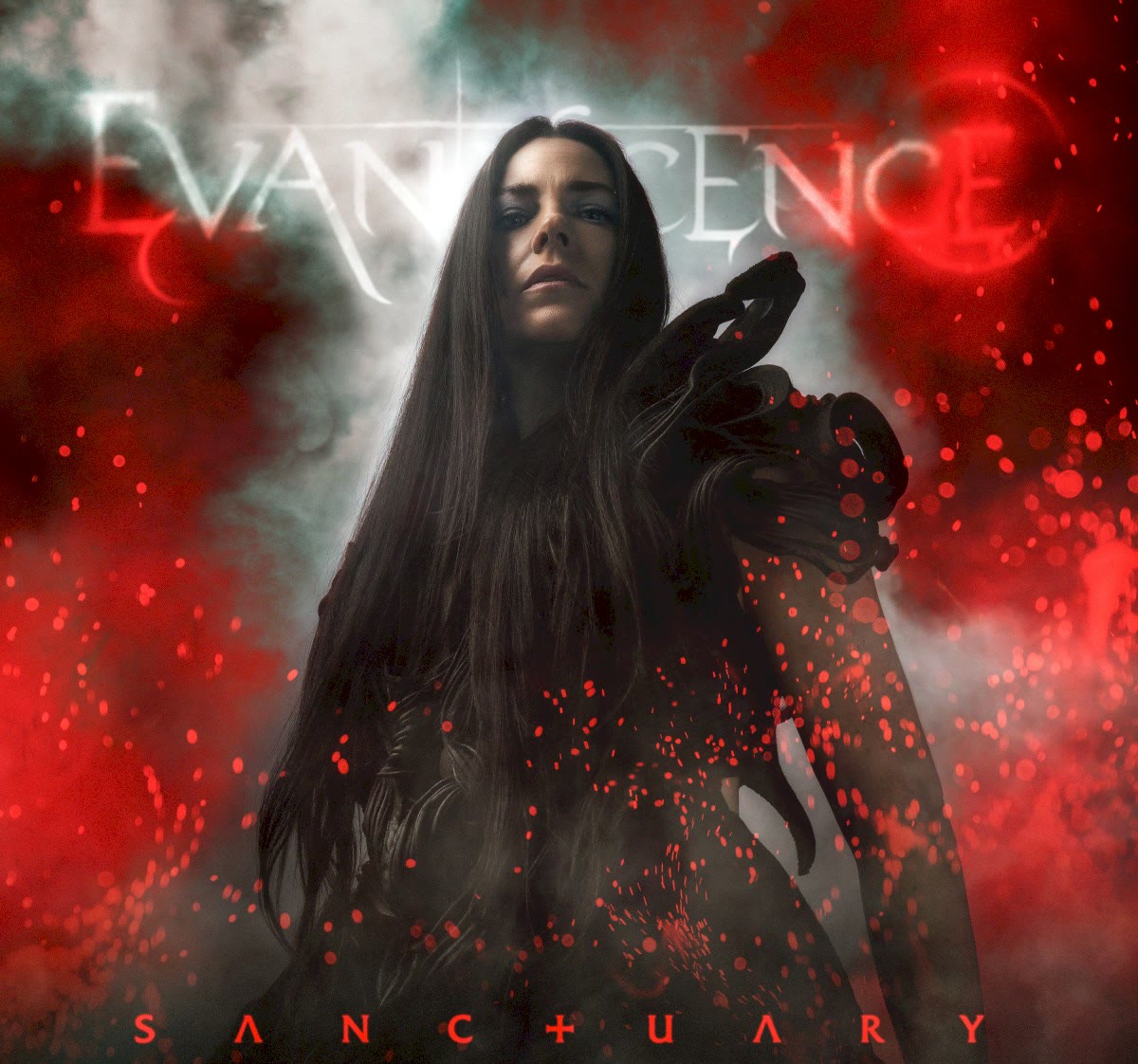
A refuge built from noise
There is a moment near the center of “Sanctuary ↗” when Evanescence stop sounding like a band revisiting its past and begin sounding like one arguing with the present.
It happens in the title track, after the album’s guitars, electronic pulses and layered vocals have spent several songs circling ideas of deception, isolation and emotional exhaustion. Amy Lee sings from a more communal place than the fragile distance of “My Immortal” or the theatrical fury of “The Open Door”: the song’s central idea is endurance together.
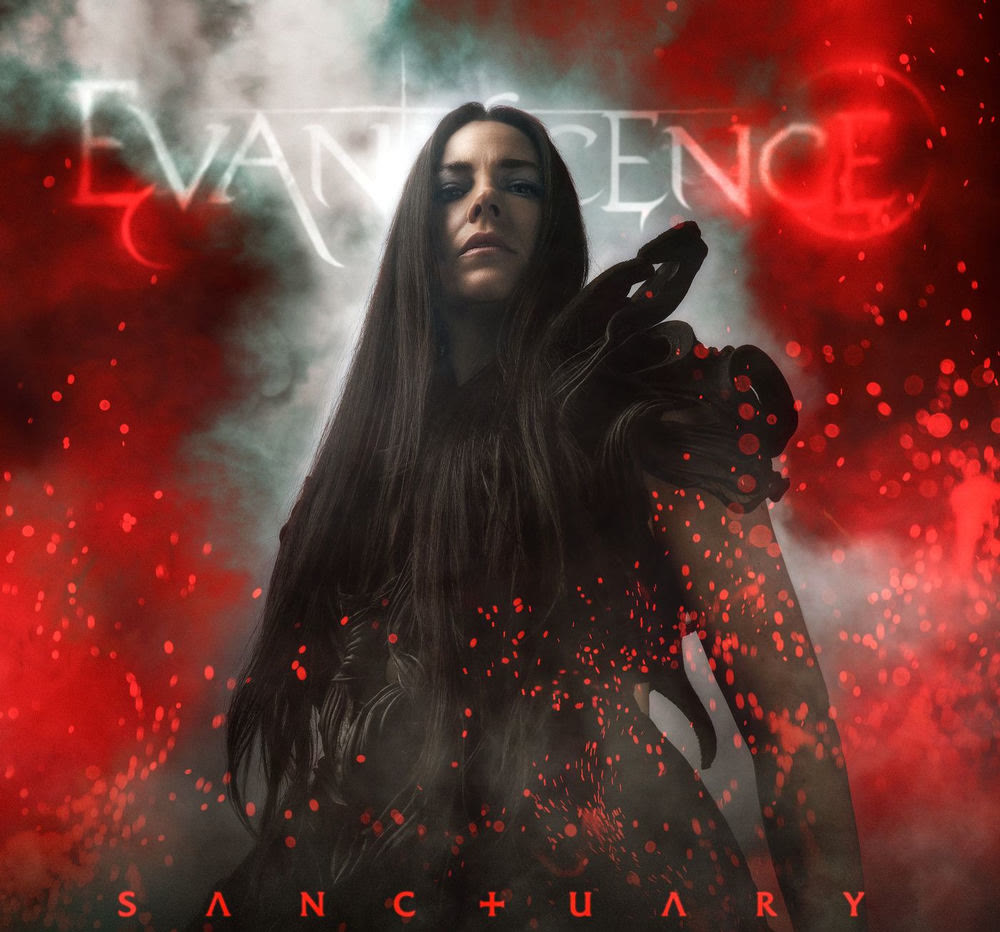
Evanescence have always understood the emotional force of grand scale: piano against distortion, a human voice framed by strings, a chorus large enough to make private pain feel almost sacred. On “Sanctuary”, released 5 June 2026, the band are asking whether those familiar gestures can still mean something in a world increasingly defined by manipulation, noise and disconnection.
The answer is yes, because they reshape the materials.
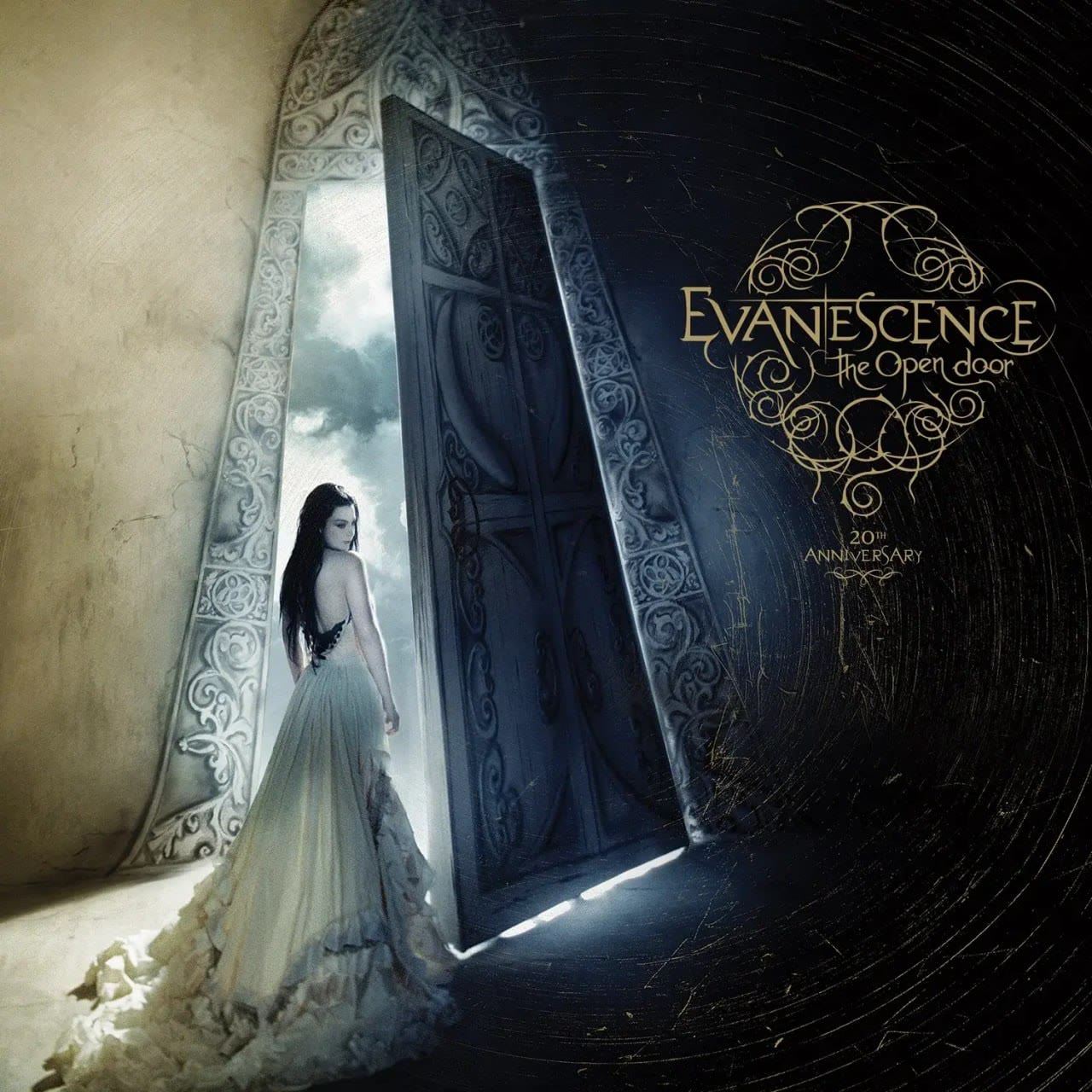
“Sanctuary” returns to Evanescence’s emotional architecture while changing the materials. The old pillars remain: Lee’s piano, her operatic control, the collision of beauty and heaviness, the sense that every chorus is trying to break through a locked door. Yet the production is harder, more electronic and more rhythmically aggressive than the band’s classic work. Jordan Fish and Zakk Cervini bring a modern, compressed intensity to much of the record, while Nick Raskulinecz remains part of the album’s broader production story. It is a confrontation with “Fallen” and “The Open Door”.
Amy Lee has described music as a place of safety, and “Sanctuary” sounds like a refuge with the doors reinforced.
Working on it has been my outlet for so much that feels wrong and out of control.
- Amy Lee, Evanescence vocalist
That statement, shared by Lee in the album’s announcement, is essential to understanding the record. These songs are attempts to process a period of political anxiety, digital uncertainty and emotional fatigue through the language Evanescence have always spoken most fluently: drama, melody and catharsis.
“Beautiful Lie” opens the door again
The album begins with “Beautiful Lie ↗,” a song that immediately establishes the tension between old Evanescence and new Evanescence.
The opening arrives with staggered guitar figures and a controlled electronic pulse, creating a sense of machinery awakening beneath the band. Lee does not enter at full force. She sounds measured, almost suspicious, as if she is testing whether the world in front of her can still be trusted. When the chorus arrives, the production widens into a heavy, gleaming wall of sound, but the song’s power comes from its unease rather than its volume.
“Beautiful Lie” carries the gothic melodrama of “The Open Door”, yet its rhythm is more contemporary and its guitars sit closer to the center of the arrangement. Moving away from the swooning grandeur of “Lithium” or “Lacrymosa”, the track feels tense and physical, with Lee’s voice pushing against the groove.
The band’s current lineup, Lee, guitarists Troy McLawhorn and Tim McCord, bassist Emma Anzai and drummer Will Hunt, gives the album a strong rhythmic spine. Anzai’s presence is particularly important to the record’s sense of movement, while Hunt’s drumming avoids the predictable crash-and-release patterns of arena rock. The group sounds like a tight unit that understands exactly when to restrain itself.
“Tell Me When You’ve Had Enough ↗” follows with a more direct attack. Its verses carry the blunt-force energy of Evanescence’s early alternative-metal identity, but the chorus is built for a much larger room. Lee’s delivery is commanding rather than wounded. She does not ask for permission to be heard; she sounds as if she has already exhausted her patience.
“Who Will You Follow” and the danger of familiarity
“Who Will You Follow ↗” is an obvious centerpiece, and it is easy to understand why it was chosen as the lead single. Produced by Fish and Cervini, the track compresses the album’s major themes into a polished, muscular anthem: distrust, influence, identity and the fear of surrendering one’s inner voice to external forces.
Musically, it is built around escalation. The verses hold back, with electronic textures and tightly controlled guitar weight creating pressure beneath Lee’s vocal. Then the chorus opens with the kind of upward motion that has defined Evanescence since “Bring Me to Life”: the melody rises, the backing thickens and Lee moves from intimate phrasing into full-throated command.
It works. But it is also the album’s clearest example of the danger facing a band with such a recognizable vocabulary.
“Who Will You Follow” sometimes feels like Evanescence remembering how an Evanescence song is supposed to function. The chorus is strong, Lee sings it beautifully and the production gives it arena-scale force. Yet compared with the best moments on “Sanctuary”, it is more architectural than revelatory. The song knows where every emotional turn belongs. It is effective because it is familiar, but that familiarity also makes it slightly less unsettling than the record’s stranger, riskier tracks.
The song’s real significance emerges in context, as part of an album increasingly preoccupied with what remains real when public language, digital images and private loyalties become difficult to trust. Lee told NPR that the record grew from a need to confront lies directly, and that music could help create real human connection.
“Rapture” lets the electronics breathe
“Rapture ↗” is where “Sanctuary” most clearly embraces the influence of Lee’s orchestral and electronic experiments.
Evanescence’s 2017 album “Synthesis” reimagined earlier songs through orchestra and electronic programming, with Lee and arranger-conductor David Campbell stripping away conventional rock arrangements to expose the music’s underlying drama. “Sanctuary” does not repeat that process, but it carries forward the idea that Evanescence’s sound is not defined by guitars alone.
“Rapture” turns that lesson into something heavier. The song moves through hard-edged electronic programming, metallic impact and a vocal arrangement that makes Lee sound both present and disembodied. Its production is deliberately unstable: the track seems to lurch between mechanical propulsion and theatrical release, with Fish and Cervini using electronics as structural elements.
The song is one of the album’s strongest because it refuses to choose between the band’s past and future. Its rhythm has a blunt, almost industrial force, while its emotional scale remains unmistakably Evanescence. Lee’s voice cuts through the digital surfaces with a clarity that prevents the production from becoming anonymous.
“Afterlife” turns a soundtrack song into an album hinge
“Afterlife ↗,” originally associated with the “Devil May Cry” soundtrack, might have felt like an external assignment placed into the middle of the album. Instead, it becomes one of “Sanctuary”’s most convincing turning points. The song was co-written by Lee and Alex Seaver and produced by Seaver and Raskulinecz, giving it a different lineage from the Fish-and-Cervini tracks.
Its strength lies in its balance. The verses have a cinematic spaciousness, while the chorus arrives with enormous hard-rock weight. Lee sounds less like she is narrating a fantasy world than confronting death, memory and survival with the authority of someone who has lived through several versions of herself.
The song also demonstrates how well Lee’s voice has aged into this material. On “Fallen”, her power was often framed as an astonishing discovery. On “The Open Door”, it became a tool for psychological excavation. Here, it feels seasoned. She can still rise into a soaring belt, but the most affecting moments are often the quieter ones, where the grain of her voice carries more meaning than sheer volume.
“Afterlife” is proof that Evanescence can absorb a song written for another medium and make it feel central to their own emotional world.
The title track is the album’s true statement
The title track is the record’s best song and the clearest answer to the question of whether “Sanctuary” represents a new chapter.
It begins in atmosphere rather than impact. A low electronic thrum and suspended textures create the feeling of a room before the lights come on. Gradually, the guitars and percussion gather around Lee, who sings with unusual restraint. The chorus does not explode so much as expand, turning the song’s private language into something communal.
The title is about the feeling of safety and connection Lee told NPR she experiences onstage with Evanescence. That explains why the song feels less like a ballad than a ritual. Its emotional center is the crowd, the band and the act of singing through fear together.
This is where the record’s production philosophy becomes clearest. The electronics do not replace the orchestra of “Synthesis”, but they perform a similar function: they enlarge the emotional space around the vocal. The guitars provide weight, the programming provides motion and Lee provides the human center.
The quiet songs expose the record’s limits
After the title track, “How Do I Heal ↗” pulls the album inward. It is a piano-led performance, and Lee’s voice is allowed to stand close to the listener. There is no hiding behind distortion here. The song depends on phrasing, breath and the fragile tension between wanting an answer and knowing one may not exist.
Lee remains a remarkable interpreter of grief, but “How Do I Heal” also exposes one of the album’s weaknesses. The song is beautifully performed, yet its emotional destination is familiar. It reaches for the same devastated intimacy that made “My Immortal” so enduring, without quite finding an equally distinctive melodic shape.
“About Us” restores the momentum with a broader, more confrontational arrangement. Its groove is unusual for the band, and the song’s atmosphere shifts between menace and release. Rather than presenting political anger as a slogan, Evanescence frame it as a crisis of relationship: what happens when shared reality fractures, when the words people use to describe the world become weapons?
“Calm Down” is quieter in title than in spirit. It begins with a spectral sense of unease before settling into a mechanized pulse. The song’s tension comes from the contradiction between its command and its sound. Nothing here is calm. The music seems to understand that telling a distressed person to calm down can be another form of dismissal.
The closing stretch: collapse, memory and hope
“Self Destruct ↗” is one of the album’s heaviest moments. Its arrangement is dense but controlled, with electronic movement underlining the song’s emotional volatility. Lee sings as someone aware of her own destructive impulses but unwilling to romanticize them. The track’s strength is its refusal to offer an easy redemption arc.
“Forever Without You” then strips away much of that force. Built around piano and Lee’s vocal, it is a song of absence, but it avoids turning grief into spectacle. The performance is intimate and deliberate. Still, like “How Do I Heal,” it feels more like a continuation of Evanescence’s established emotional language than a major expansion of it.
The closing “Wide Open Heart” is more successful because it turns vulnerability outward. Its synth-led opening gives way to a cinematic build, and the song closes the album not with certainty but with a decision to remain emotionally available. Apple Music describes it as a slow-burning finale led by Lee’s haunting vocals, and that description captures its patient construction.
The final effect is not triumph in the conventional sense. “Sanctuary” does not pretend that music can repair everything. It argues for music as a place where repair can begin.
A new chapter with familiar foundations
So is “Sanctuary” a true reinvention, or a calculated return to the emotional architecture of “Fallen” and “The Open Door”?
It is both, and that tension is the album’s defining strength.
The record deliberately recalls the old Evanescence: the piano, the gothic grandeur, the high drama, the enormous choruses and Lee’s voice placed at the center of every emotional storm. But it does not simply reproduce the past. The electronic production is more integrated, the guitars are often more aggressive and the band’s songwriting is shaped by a contemporary anxiety that feels distinct from the personal mythology of the early records.
The album is not as consistently devastating as “The Open Door”, nor does it possess the immediate cultural shock of “Fallen”. Its ballads slow the momentum, and some of its anthems rely too heavily on familiar emotional mechanics. Yet its best songs, “Beautiful Lie,” “Rapture,” “Afterlife,” “Sanctuary” and “Self Destruct”, show a band refusing to become a tribute act to its own history.
Amy Lee has spent two decades being treated as a symbol: the gothic pianist, the metal frontwoman, the woman with the voice large enough to fill a cathedral. On “Sanctuary”, she sounds less interested in symbolizing anything than in speaking plainly through the noise.
That may be the album’s boldest reinvention: a more mature understanding of what Evanescence has always offered its listeners, the knowledge that someone else is standing inside the darkness too.
“Sanctuary” shows Evanescence choosing to build again from the ruins, louder, sharper and, at its best, more human than ever.