The album after the breakthrough
Courtney LaPlante’s greatest creative strength has never been simply that she can sing beautifully and scream violently. Plenty of vocalists can do one or the other. Far fewer can make those extremes feel like parts of the same emotional sentence.
On “Tsunami Sea ↗”, Spiritbox’s second full-length album, LaPlante turns contrast into a language. Her clean voice works together with Mike Stringer’s guitar work, while her screams act as structural peaks across the arrangement. Everything belongs to the same atmosphere: beauty threatened by collapse, intimacy swallowed by scale, a human voice trying to remain recognizable inside an electronic and metallic storm.
Released on March 7, 2025, “Tsunami Sea” arrived after the success of “Eternal Blue”, the “The Fear of Fear” EP, repeated Grammy nominations, and a period in which Spiritbox had become one of heavy music’s most visible modern bands. The album’s central image came from the band’s home on Vancouver Island, where the ocean becomes both landscape and psychological metaphor. The title suggests not a single wave, but a world permanently overtaken by water.
That is the record’s first achievement: it understands heaviness as an environment rather than a tempo.
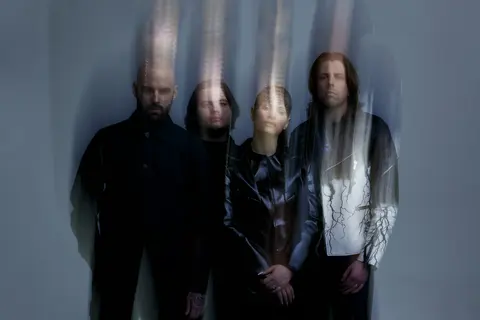
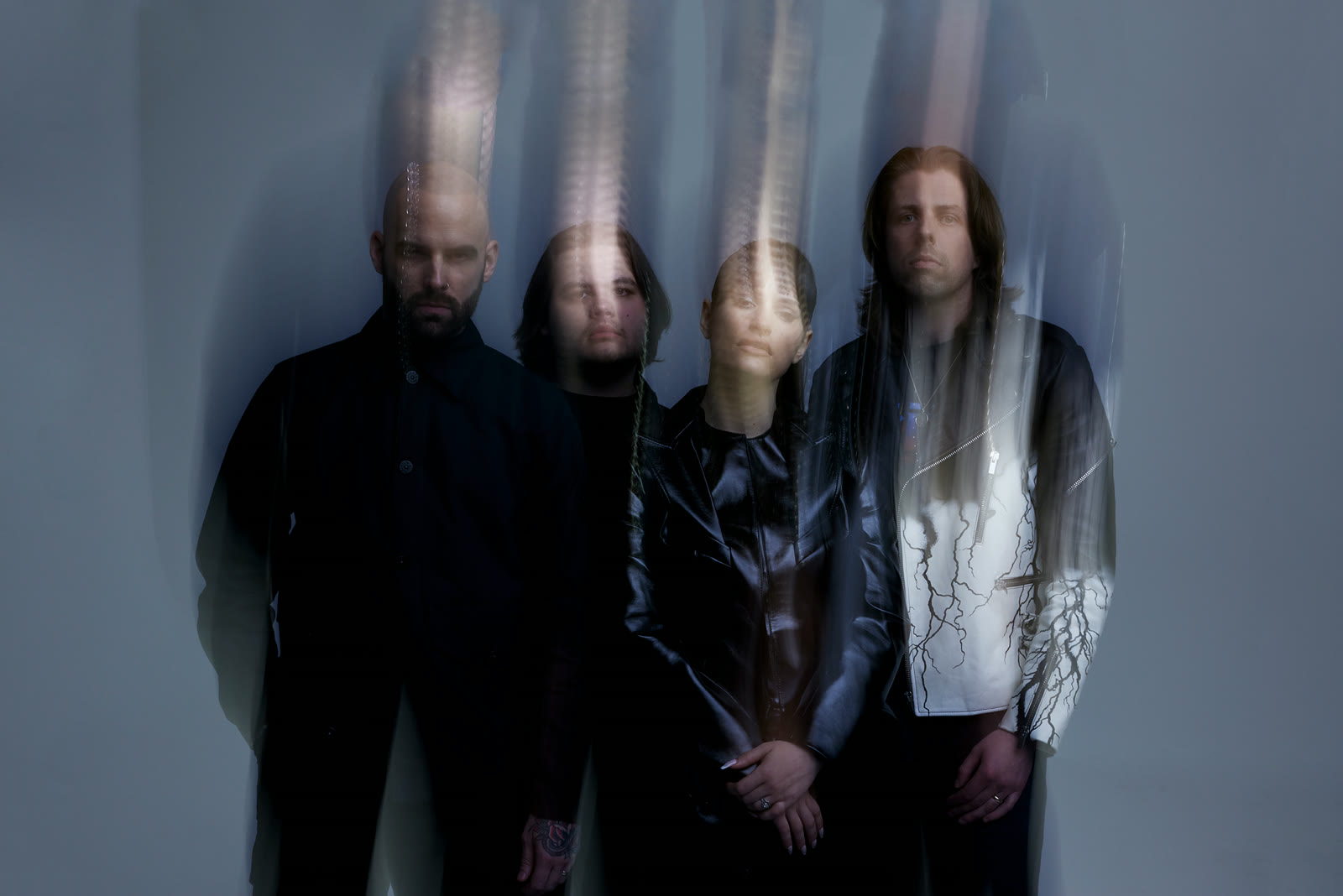
Spiritbox are Courtney LaPlante, Mike Stringer, bassist Josh Gilbert and drummer Zev Rose. On the album, Stringer and producer Dan Braunstein handle much of the instrumental architecture, while LaPlante writes the lyrics and provides the album’s emotional center. Rose supplies the live drums, Gilbert contributes bass and backing vocals, and the production gives every part enough space to feel deliberate without making the songs sound sterile.
The result moves past “Eternal Blue”. It is more assured, more rhythmically varied and, at times, less interested in proving that Spiritbox can be heavy. The band already knows that. The question becomes what else heavy music can contain.
“Fata Morgana”: an opening statement in low frequencies
The album begins with “Fata Morgana ↗,” a title that evokes an optical illusion: something visible on the horizon but impossible to reach. Musically, it functions as a mission statement. Stringer’s low-tuned guitar carries a sense of physical weight, while the arrangement moves through spacious, atmospheric passages instead of rushing toward its first obvious payoff.
The guitar tone is immense but sculpted. Its low end leaves room for LaPlante’s voice to move between spectral melody and harsher attack. The track’s drama comes from its pacing: Spiritbox let tension accumulate until the heaviness feels earned.
Stringer has explained that he used an eight-string guitar while developing the track, seeking an unusually low register for the album’s entrance. That choice is audible in the way “Fata Morgana” seems to pull downward even when the arrangement is still suspended in ambience.
“Black Rainbow” and “Perfect Soul”: light inside the machinery
“Black Rainbow” introduces one of “Tsunami Sea”’s most compelling tensions: the band’s ability to make modern production feel almost sensual. The song carries electronic percussion and a polished, alt-metal sheen, but the underlying guitar work remains angular and unsettled. It is a song about attraction to something dangerous, and its sound mirrors that push and pull.
Then comes “Perfect Soul,” one of the album’s most direct and memorable songs. Its success rests on restraint. The guitars do not crowd LaPlante’s vocal lines; instead, they create a dark frame around them. She sings with an unusually open tone, allowing the melody to carry the song before the arrangement thickens.
The track works because the chorus does not need to compete with the verses. It expands them. LaPlante’s vocal performance is technically controlled, but what stays with the listener is the sense of someone trying to articulate a feeling before it disappears. The song’s alt-rock clarity also helped demonstrate how naturally Spiritbox can occupy radio and festival spaces without sanding away their identity. The band’s own release announcement described it as an alt-metal ballad, noting its active-rock and mainstream-rock airplay.
“Keep Sweet”: the album’s most revealing fracture
“Keep Sweet ↗” may be the best song on “Tsunami Sea” because it brings every part of Spiritbox’s method into alignment.
The opening guitar figure is deceptively measured, with an unusual voicing that gives the riff a dislocated, almost dreamlike quality. Stringer has discussed using a drop-G tuning for the track, which helps explain its deep but spacious character. The riff hangs in the air, allowing the dissonance to register.
LaPlante responds with a performance rooted in emotional destabilization. Her clean delivery has an exhausted precision, while the harsher passages erupt from beneath the song. The chorus is melodic, yet far from comforting. It sounds like someone trying to maintain composure while recognizing that composure is failing.
The production is especially effective here. The drums build pressure around the vocal. Bass and guitar occupy different depths, and the electronic elements behave like intrusive thoughts. This is Spiritbox at their most psychologically detailed.
“Soft Spine”: violence as a hook
“Soft Spine ↗” is the album’s bluntest strike. Released before the full record, it gave listeners the heaviest first impression possible: a tightly coiled riff, punishing rhythmic accents and LaPlante delivering contempt with frightening clarity.
Its brilliance is structural. The song is short, direct and built around the kind of phrase that can survive both a festival crowd and a phone speaker. The arrangement contains real technical detail, yet the song’s central impact is immediate.
LaPlante’s vocal is the star, particularly because her clean phrases sharpen the aggression until the screams arrive as their inevitable consequence.
The track earned Spiritbox another Grammy nomination for Best Metal Performance, confirming how effectively the band had moved from online discovery and scene credibility into the center of contemporary heavy music.
“Tsunami Sea”: the emotional center
The title track slows the album’s pulse without reducing its scale. “Tsunami Sea” feels less like a conventional song than a weather system moving across the record. The guitars shimmer and swell, while LaPlante sings with a softness that makes the surrounding heaviness feel even larger.
The song is unsentimental and vulnerable. The ocean metaphor becomes personal: an emotional condition that surrounds everything. This is where the album’s concept becomes more than artwork or branding. The sea is inside the characters of these songs.
There is an almost gothic patience to the arrangement. Spiritbox allow notes to decay, spaces to remain open and vocal lines to carry tension without immediate resolution. For a band often praised for breakdowns, this is a reminder that atmosphere can be just as physical as impact.
“A Haven With Two Faces”: the album’s most elegant contradiction
At more than five minutes, “A Haven With Two Faces” is one of the album’s longest and most ambitious pieces. It moves between an ethereal, almost dream-pop atmosphere and heavier passages without treating either side as a disguise.
LaPlante’s performance is particularly nuanced. She can sound intimate one moment and monumental the next, but the key is how she changes texture rather than simply volume. Her voice becomes breath, edge, grain and force. That flexibility is central to Spiritbox’s identity.
The song also exposes one of “Tsunami Sea”’s minor weaknesses: its arrangements are so carefully layered that LaPlante’s voice can occasionally feel absorbed into the production instead of standing above it. The band’s commitment to atmosphere is admirable, but a few moments would benefit from more vocal space. Even so, the song’s emotional architecture is impressive.
“No Loss, No Love” and “Crystal Roses”: the collision
“No Loss, No Love” is where Spiritbox embrace disruption. It moves from crushing guitar work into electronic textures and spoken or processed vocal passages, creating the sense of several songs trying to occupy the same body.
LaPlante’s voice becomes almost synthetic in places, turning feeling into an altered state. The track is restless and confrontational, and its refusal to settle is precisely what makes it memorable. It works as a controlled overload.
“Crystal Roses” follows with a different kind of modernity. Its opening electronic pulse and dance-oriented rhythm place it close to the world of industrial pop and club music, before the guitars pull the song back toward metal. That collision is the whole point.
Spiritbox understand that electronic music and metal have always shared an interest in repetition, texture and physical response. “Crystal Roses” simply makes the connection explicit. In a live setting, its trance-like momentum gives the band another route into the crowd beyond the traditional mosh-pit release. Recent arena performances have emphasized that song’s dance-inflected character.
“Ride The Wave” and “Deep End”: release and aftermath
“Ride The Wave” is one of the record’s most structurally expansive tracks. It moves patiently, building from an atmospheric foundation toward an emotional release that feels less like triumph than surrender. LaPlante sings as though she is trying to remain upright while accepting that resistance has become exhausting.
The album closes with “Deep End ↗,” a fitting title for a record so committed to immersion. Its melody is broad and emotionally legible, but the arrangement retains the darkness that has shaped the entire album. The song does not offer a clean escape from the sea. Instead, it suggests that survival may mean learning how to move through it.
As a closing track, “Deep End” is effective because it gathers the album’s opposing impulses: heaviness and vulnerability, melody and abrasion, intimacy and spectacle. It is not the most experimental moment on the record, but it provides the emotional afterimage.
What comes after “Tsunami Sea”
If “Tsunami Sea” established Courtney LaPlante as one of modern metal’s most versatile vocalists, the period that followed has tested a larger question: what happens when her artistic language enters spaces that were not traditionally built for extreme metal?
In September 2026, Spiritbox released “Mourning ↗,” their first new song after “Tsunami Sea”. It is more subdued and melodic than the band’s most aggressive material, built around atmospheric production, fiery guitar accents and LaPlante’s clean voice. The song’s official video, directed by Alex Bemis and Mike Stringer, extends the band’s long-running habit of treating visuals as part of the composition.
“Mourning” matters because it proves Spiritbox can make grief hit just as hard without a breakdown. LaPlante’s restraint becomes its own form of power.
That visual instinct has been present since the band’s earliest work. LaPlante has repeatedly spoken about connecting sound and image, while Spiritbox’s videos have often been developed with a hands-on, self-directed sensibility. The band’s visual world gives physical shape to anxiety, alienation, religious control, transformation and desire.
From Evanescence to Valorant
LaPlante’s current momentum also reflects a broader cultural shift. In 2025, she joined Poppy and Evanescence’s Amy Lee on “End Of You ↗,” a collaboration that brought together three very different approaches to feminine power in heavy music. Lee described LaPlante and Poppy as artists who “fearlessly embrace their femininity within such heavy music,” calling that combination beautifully rebellious.
The collaboration worked because each voice retained its identity. Lee brought dramatic gothic authority, Poppy supplied theatrical ambiguity and LaPlante contributed Spiritbox’s volatile movement between clean melody and extreme vocal attack.
The song later entered the live world when Lee and Poppy performed it during Evanescence’s 2026 European tour, even without LaPlante present. Spiritbox also joined Evanescence’s North American tour as main support, placing the band in direct conversation with one of the acts that helped establish a previous generation of female-fronted alternative metal.
Then came “If The Sun Burns Out Tonight,” the 2026 “Valorant” Champions anthem created by Grabbitz with LaPlante and Bring Me The Horizon’s Oli Sykes. Extreme metal here becomes native to gaming culture. The song was written and produced by Grabbitz, and its live debut placed LaPlante and Sykes in the opening ceremony of the Valorant Champions Grand Finals in Shanghai.
I’ve always been drawn to projects that blur the lines between storytelling and music.
- Oli Sykes, Bring Me The Horizon vocalist
LaPlante’s presence in that world fits naturally. Her voice already carries the scale, clarity and dramatic contrast that modern games demand. She can make a chorus feel cinematic, a scream feel like a weapon and a whisper feel like a private message sent through a stadium.
The real impact
So what is Courtney LaPlante’s greatest impact: vocal technique, visual storytelling or cultural reach?
It is the way she refuses to separate them.
Her vocal technique gives Spiritbox emotional range. Her visual storytelling gives that range a body, a color and a setting. Her movement through gaming, short-form culture, alternative rock, major tours and mainstream festival spaces proves that extreme metal can enter popular culture without apologizing for its extremity.
Spiritbox demonstrate that heaviness can be melodic, glamorous, cinematic, vulnerable and rhythmically inviting, and LaPlante’s achievement is to make those qualities feel native to one another.
That is why “Tsunami Sea” remains so important. It is not a perfect album. Its density occasionally blurs its best vocal moments, and some songs feel more like meticulously designed environments than fully unforgettable compositions. But its ambition is real, and its strongest tracks, “Keep Sweet,” “Perfect Soul,” “Soft Spine,” “No Loss, No Love” and “Deep End”, show a band expanding without abandoning its center.
“Mourning” suggests that the next era may be even more emotionally exposed. The Valorant anthem proves LaPlante can carry metal into a global gaming spectacle without losing her identity. “End Of You” places her alongside Amy Lee and Poppy in a lineage of women reshaping heavy music on their own terms.
Courtney LaPlante is helping redefine what crossover means. The future she is designing does not require metal to choose between the pit, the stage, the screen and the feed.
It can exist everywhere at once, and still sound like itself.