On October 15, 2026, Nightwish and Floor Jansen announced that they were parting ways after more than a decade together. Their statement was calm, courteous and conspicuously short on detail. There was no accusation, no public recrimination, no open letter delivered after a final concert. Both parties described the decision as mutual and wished each other well.
For Floor, the next chapter means concentrating on her solo career, including her upcoming album Hytress, scheduled for release in 2027. For Nightwish, it means entering the studio in 2027 to begin work on a new album, this time without the singer who has defined the band’s sound for most of the past thirteen years. As of October 27, no replacement has been announced. (Floor Jansen’s official statement; Kerrang!)
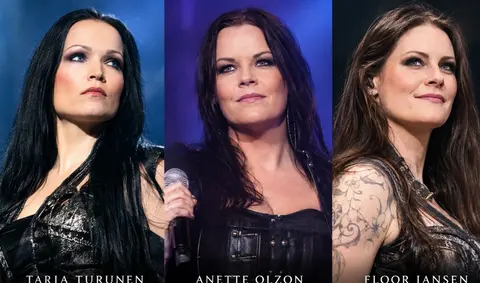
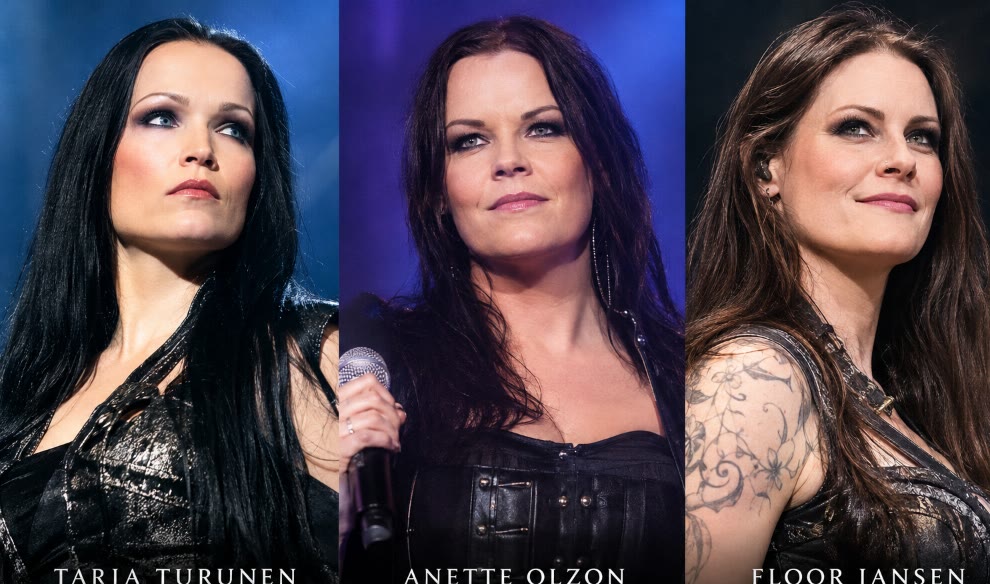
The announcement completes a remarkable cycle. Tarja Turunen, the operatic voice who helped establish Nightwish as one of symphonic metal’s defining bands, was dismissed in 2005. Anette Olzon, who replaced her, departed under bitter circumstances in 2012. Floor, who replaced Anette, remained for more than a decade before choosing a different artistic future.
Three singers. Three different endings. One band that has repeatedly survived the loss of the person standing at the front of the stage.
So why does it keep happening?
The easy answer is that Nightwish is a difficult band to sing for. The more provocative answer is that its history reveals an enduring tension between the people who give its music a voice and the creative institution determined to continue producing it.
Neither explanation tells the whole story. The departures happened under different circumstances, and the available evidence does not establish a single hidden cause behind all three. But the timeline, the musicians’ own accounts and the band’s more recent reflections reveal a pattern worth examining.
Nightwish has repeatedly demonstrated that it can survive a change of singer. The more complicated question is what that survival has cost the people involved.
The Dream Belongs to One Person. The Voice Belongs to Another.
To understand the history, it helps to return to the beginning.
Nightwish took shape in 1996 when keyboardist and songwriter Tuomas Holopainen invited guitarist Emppu Vuorinen and singer Tarja Turunen to his parents’ lakeside cabin in Finland. What began as a small, atmospheric musical project grew into a metal band with increasingly ambitious arrangements, orchestration and international aspirations. By the time Once arrived in 2004, Nightwish had become a major force in the genre.
Holopainen supplied the band’s central musical and lyrical vision. Tarja supplied something equally important: a voice that made that vision immediately recognisable.
Her classical vocal training and operatic delivery helped distinguish early Nightwish from almost everything else in metal. Across albums such as Oceanborn, Wishmaster, Century Child and Once, her voice became inseparable from the band’s identity.
This created a particularly consequential relationship. Holopainen was the principal architect of the songs, but Tarja was their most recognisable interpreter. The composition and the performance were different forms of authorship, and both were essential to the result.
That arrangement worked spectacularly while the people involved could work together.
It became much harder when they could not.
The singer of a conventional rock band can sometimes leave without fundamentally changing its identity. Nightwish’s vocalist is a more complicated proposition. The voice carries melodic character, theatrical presence and much of the emotional connection listeners establish with the songs. Replacing it can feel less like hiring a new band member and more like changing the narrator of a story people already love.
Nightwish nevertheless made that change twice before Floor’s departure.
To understand why, we must separate what the public record establishes from what remains uncertain. The first split involved deteriorating personal relationships and competing accounts of business conflict. The second involved illness, touring demands and a fundamental disagreement about how a band should respond when its singer could not perform. The third, at least according to the parties’ public statements, is about future artistic ambitions.
The circumstances differ. The recurring challenge is how the band balances its continuing existence against the needs of the people who embody its music.
2005: The Letter That Turned a Band Dispute into a Public Trial
By October 2005, Nightwish were at the height of their breakthrough period. Once had expanded their international audience, and songs such as “Nemo ↗” and “Wish I Had an Angel ↗” had carried them far beyond their original niche. Their world tour culminated in a major concert at Helsinki’s Hartwall Arena on October 21.
It should have been a moment of celebration.
Instead, immediately after the show, the other four members delivered a letter to Tarja. It was subsequently published online, making a deeply personal and professional dispute public.
The letter did not dress the decision up as an amicable separation. It accused Tarja and her husband, Marcelo Cabuli, who managed her career, of damaging the relationships within the band. It described a breakdown in communication, disagreements about money and conflicting expectations about Nightwish’s future. Most devastatingly, it informed her that the band intended to continue without her.
One sentence captured the group’s stated justification:
People who do not talk to each other for a year do not belong in the same band.
The letter’s claims can be read in the original statement reproduced by Blabbermouth.
There is a credible basis for the central point that relations had seriously deteriorated. Tuomas later described the decision as the culmination of a long period of conflict, rather than a spontaneous reaction to one performance or one argument. The band believed continuing with the existing arrangement was no longer viable.
But there is a difference between deciding that a professional relationship must end and choosing how to end it.
Tarja’s response rejected the band’s account of events and condemned the decision to make private matters public. She said the dismissal had come as a complete surprise. The subsequent press coverage placed her under extraordinary scrutiny at precisely the moment when she was trying to understand the end of a defining chapter of her life.
In a 2005 response quoted by Finnish broadcaster MTV Uutiset, she objected to the public airing of personal disagreements. She later described the period as devastating, saying in a 2012 interview that she had been left deeply hurt by what she experienced as public humiliation.
The conflict was not simply between a singer and four bandmates. Competing management interests were involved, including the other members’ representatives and Cabuli’s role in Tarja’s affairs. This created a situation in which professional disagreements could become entangled with personal loyalties, financial considerations and suspicion about the other side’s intentions.
The most revealing retrospective account came twenty years later.
In an October 2025 interview with MTV Uutiset, bassist and vocalist Marko Hietala described fear as a central force behind the events. He recalled the environment created by competing management teams and acknowledged that he had participated in the decision to remove Tarja and her husband from the band’s working arrangement.
Hietala also reconsidered his own role. He said he believed the matter might have been resolved differently had the conflict involved only the musicians themselves. Looking back, he regretted the damage done to Tarja and recognised that the public fallout had hurt her far too much.
His reflections do not prove that the band’s accusations were false. Nor do they establish that Tarja was blameless in the breakdown of the relationship. They complicate the original story by revealing how a situation understood at the time as necessary came to look, with distance, unnecessarily destructive.
That distinction matters. A band can reach a legitimate conclusion that its members cannot continue together while handling the consequences in a way that inflicts avoidable harm.
What Tuomas says now
The most significant reassessment has also come from Holopainen himself.
In an interview published by Metal Hammer in 2026, as Nightwish marked three decades of history, he acknowledged that the band had deserved criticism for the way it handled Tarja’s dismissal.
We get blamed for what happened, for good reason.
The admission appears in Holopainen’s thirtieth-anniversary interview, in which he also maintained that he believed the band had no viable future with Tarja at that point.
That is an important distinction. He has not recanted the decision itself. He has acknowledged the damage caused by how it was carried out.
The controversy was especially difficult because the letter arrived at the peak of Nightwish’s success. Fans had just witnessed an apparently triumphant final show, only to discover that the band’s most recognisable voice had effectively been dismissed in a public declaration.
The resulting dispute became inseparable from the music.
Dark Passion Play, released in 2007 with Anette Olzon as the new singer, included “Bye Bye Beautiful ↗”, which Holopainen explicitly described in a contemporaneous interview as a farewell to Tarja. Whatever the song’s artistic merits, its existence gave the split a musical afterlife. The conflict was no longer only an event that happened to Nightwish; it became part of the material through which listeners understood the band.
Tarja’s interpretation remains different. In a 2026 interview with Metal Hammer, she described the aftermath as an attempt to damage her publicly and explained that she had chosen to move on rather than pursue every contractual option available to her.
I probably should have put them through hell.
That was her retrospective assessment of the legal and professional leverage she believes she possessed.
The two sides may never agree on the underlying grievances. What has become clearer is that the public method of separation created a wound that outlasted the professional relationship itself.
Anette Olzon: A New Voice, an Old Pressure
Nightwish did not collapse after Tarja left. It did what successful bands do when they are determined to survive: it found another singer and carried on.
Anette Olzon joined in 2007 after a search that, according to Holopainen, attracted approximately 2,200 candidates. The music for Dark Passion Play had already been recorded, and the band needed a vocalist capable of bringing its existing material to life.
Holopainen later praised Olzon’s interpretations, describing her voice as refreshing and affirming that she had been the right choice for both Dark Passion Play and its successor, Imaginaerum.
This is important because Anette’s departure is sometimes retrospectively presented as proof that she was unsuitable for Nightwish. Holopainen’s own comments contradict that simplistic reading. He has defended the musical contribution she made to the two albums.
Her voice was different from Tarja’s. It was less associated with the operatic conventions of the band’s earlier period, and it brought a different character to the songs. That difference was not necessarily a weakness. It allowed Nightwish to evolve instead of attempting to recreate the precise musical conditions of its first decade.
But changing a voice does not automatically resolve the organisational problems that accompanied the previous singer’s departure.
Nightwish continued to tour heavily. In the anniversary interview, Holopainen acknowledged that the Dark Passion Play touring cycle lasted approximately two years and involved around 250 shows, including four American tours. He subsequently described that pace as excessive.
The schedule is relevant because the next crisis emerged during a US tour in September 2012.
Denver: The night the relationship fractured
On September 28, 2012, Olzon became seriously ill before a show in Denver. Her account, published on her official blog and reported contemporaneously, described an emergency-room visit, severe vomiting, a fever and hospital treatment for dehydration. Medical investigations did not initially establish the cause of her illness, and she was advised to return to hospital as her condition deteriorated.
Nightwish faced a decision: cancel the show or attempt to perform without their lead singer.
The band chose the latter. Elize Ryd of Amaranthe and Alissa White-Gluz, then associated with The Agonist, stepped in to help cover the performance.
The musicians were attempting to solve an immediate operational problem. A tour involves venues, crews, promoters, travel and commitments extending far beyond the people on stage. A last-minute cancellation can have financial and logistical consequences for everyone involved.
But Olzon was not merely absent from work. She was ill, receiving medical care and reportedly unaware that other singers would take her place until after the decision had been made.
The difference between those two perspectives was fundamental.
Nightwish praised the substitute singers and the audience for helping salvage the evening. Olzon objected to the decision to perform without her, explaining that she had not been consulted.
To think a show is more important than the humans in the band is, for me, so totally not in this world.
Her reaction, recorded in a blog post reported by Blabbermouth on September 29, 2012, made the disagreement about much more than one concert.
For the band, the priority had been keeping the tour moving. For Olzon, the situation exposed a disturbing question about her standing within the group: if she could be replaced on stage without being consulted, how secure was her position as its lead singer?
Neither perspective is difficult to understand. The problem was the absence of trust necessary to reconcile them.
Three days after the Denver performance, on October 1, Nightwish announced that it and Olzon had decided to part company. The statement used the language of mutual agreement but also acknowledged that the band’s direction and its needs had come into conflict.
Floor Jansen, formerly of After Forever and ReVamp, was announced as the replacement vocalist for the remaining dates of the Imaginaerum world tour.
Was Anette fired because she was pregnant?
There is another disputed element to the story.
Olzon subsequently challenged the description of her departure as mutual. In a 2013 interview with Prog, she said that she had been fired and connected the decision to the fact that she was pregnant with her third child.
I was fired exactly as Tarja was fired, but maybe in a more quiet way.
Her account was published in reporting reproduced by Blabbermouth. The band disputed her version of events and denied that her pregnancy was the reason for the separation.
The distinction is essential. Olzon’s belief that pregnancy contributed to her dismissal is part of her own account, not an independently established explanation for what happened. The public statements do not conclusively resolve the disagreement.
What they do establish is that the two sides understood the ending differently.
The official language suggested an agreed separation after irreconcilable differences. Olzon said she had been dismissed, and that the wording understated how little control she felt she had over the outcome.
This echoes the first departure without making the circumstances identical. Tarja said the dismissal had come as a surprise and resented the public treatment; Anette rejected the suggestion that she had freely chosen to leave. Both women challenged the narrative used to explain their exits.
Their stories invite a question that Nightwish has never fully answered in public: when the band decides that its future requires a different singer, how much room does the singer have to influence the timing, the process or the explanation?
The price of keeping the tour alive
Holopainen’s recent reflection on the band’s touring schedule offers a more tangible part of the answer.
In 2026, he acknowledged that the relentless pace of the Dark Passion Play cycle was a mistake. That admission does not prove that overwork alone caused Olzon’s departure. It does, however, establish that the band had pushed itself through a schedule that placed considerable pressure on its members.
A singer’s work is particularly demanding. The voice is both the performance instrument and the defining feature of the role. Illness, fatigue and the physical consequences of touring can directly affect a singer’s ability to deliver a show. Unlike a guitar part, a voice cannot simply be changed out without altering the identity of the performance.
Olzon’s Denver experience exposed the collision between that physical reality and a band’s commercial obligations. Once the relationship had deteriorated to the point where the parties could not agree on how to manage such a situation, continuing together may have become impossible.
Yet it is difficult to ignore the parallel with 2005. In both cases, a decision made within the band became a public rupture, followed by a dispute over how the separation was characterised.
Nightwish survived again. Olzon’s contribution remained in Dark Passion Play and Imaginaerum, and the band moved forward with a different singer.
But this time the replacement did not come from an open search. Floor Jansen arrived in the middle of a tour as an emergency solution.
What happened next transformed the band’s history.
Floor Jansen: The Singer Who Made the Past and Future Work Together
Floor Jansen was not an unknown newcomer being asked to step into a role previously occupied by one of metal’s most distinctive vocalists. By 2012, she had already spent years developing her own reputation through After Forever and ReVamp.
Her versatility was an obvious advantage. Nightwish’s catalogue contained music written around Tarja’s operatic delivery as well as songs shaped for Olzon’s different voice. Jansen could approach both traditions without reducing herself to an imitation of either singer.
Holopainen praised her ability to handle the band’s earlier operatic style alongside its more contemporary material. The transition, initially intended to be temporary, proved successful enough that she was invited to become a permanent member in 2013.
Floor subsequently recorded three Nightwish studio albums: Endless Forms Most Beautiful (2015), Human. :II: Nature. (2020) and Yesterwynde (2024).
Her tenure was substantially longer than Olzon’s. More importantly, it demonstrated that Nightwish’s vocal identity could evolve without continually reopening the wounds of the earlier departures.
With Jansen, the band appeared to have solved its succession problem. She could sing the old material, lead the newer songs and command the stage with an identity that belonged to her rather than to either predecessor.
The contrast is particularly clear in the band’s live performances. Jansen could take on the dramatic scale of “Ghost Love Score” while bringing her own interpretation to the repertoire of Imaginaerum. The point was not that she had replaced Tarja and Anette perfectly. It was that she could make the music work across those eras while remaining recognisably Floor Jansen.
For more than a decade, the question was no longer whether Nightwish could keep its singer. It was whether the band had finally found a stable arrangement.
The answer appeared to be yes.
Then, in 2023, Nightwish announced that it would stop touring for an indefinite period.
The Warning Signs Were Bigger Than the Singer
On April 6, 2023, Nightwish announced that after its scheduled performances in June, it would step away from live concerts for an undetermined period and would not tour in support of its next album.
The statement described the reasons as personal and essential to the band’s wellbeing and future. It explicitly rejected suggestions that Floor’s pregnancy or the members’ individual projects had prompted the decision.
The reasons for this decision are personal, but we all agree they are vital to the wellbeing and future of the band.
The announcement can be read in Nightwish’s official statement.
Floor’s health had already become a matter of public concern. In October 2022, she revealed that she had been diagnosed with breast cancer and that she was undergoing treatment. Her subsequent recovery was encouraging. In June 2023, the band cancelled a performance because of concerns about her health during pregnancy, and Floor later explained that severe exhaustion had forced her to cancel additional shows and prioritise rest.
These are important parts of her life, but they should not be treated as an explanation for her 2026 departure. The band explicitly said in 2023 that pregnancy was not the reason for its wider touring hiatus, and neither party has publicly identified her previous health issues as the cause of their later separation.
The more revealing development came in Holopainen’s 2026 anniversary interview.
He described the decision to stop touring as essential to his own wellbeing. The prospect of continuing indefinitely under the previous conditions had become untenable, and other members agreed that the band needed a break.
His account went well beyond an ordinary desire for time off. He acknowledged that the touring experience had left him traumatised and said that he had reached a point where he could no longer continue as before.
The broader picture is difficult to dismiss. The drummer Jukka Nevalainen had already stepped away from touring in 2014 before leaving the band in 2019. Marko Hietala announced his departure in 2021, citing depression, disillusionment with the music industry and the need to find new reasons to continue making music. Holopainen himself eventually recognised that the band needed to stop.
Hietala’s official resignation statement is especially revealing. He described a loss of validation, frustration with the music business and mental-health struggles that had made continuing dangerous for him. He specifically rejected the idea that Tuomas was to blame for his departure.
These are not three more cases of female lead singers leaving. They show that the pressures surrounding Nightwish have affected other members, too.
The pattern is therefore larger than a revolving door at the microphone. It is also a story about what happens when a band becomes an international enterprise, with enormous expectations attached to a creative project that began in a small Finnish town.
For years, the machine kept moving. Albums had to be made, tours had to be completed, and the group’s momentum had to be preserved. Eventually, the people sustaining that momentum began to reach their limits.
The question then becomes not only why the vocalists leave, but whether the band’s long-standing insistence on survival has sometimes made it difficult to recognise when survival requires stopping.
October 2026: A Different Kind of Ending
Floor’s departure is distinct from the previous two.
The announcement on October 15 contained no suggestion of a personal falling-out. Both sides described the separation as mutual, and Floor explained that she would now give her full attention to her solo career and upcoming album.
My solo career will now get all of my attention.
Her statement was published alongside the band’s confirmation that Nightwish would continue and return to the studio in 2027.
There is a straightforward explanation available: two established artistic projects have reached a point where their future ambitions no longer align. Floor has her own musical identity, a solo album to release and a tour to develop. Nightwish, meanwhile, intends to make another record and eventually return to the stage.
The hiatus matters here. Floor’s final departure did not follow another exhausting world tour or an on-stage crisis. Nightwish had already stopped performing live in 2023, and the group was still on hold when the split was announced.
In an August 2026 interview, shortly before the separation, Jansen described Nightwish as being on a temporary hold, with no activity scheduled. That context makes it plausible that the time away from the band allowed the members to reconsider what they wanted next. It does not establish that the hiatus caused the departure, but it helps explain why separate artistic ambitions could become more compelling than waiting indefinitely for the group to resume touring.
It would be irresponsible to invent a more dramatic explanation where none has been provided. There is no public evidence that Floor was forced out, that a dispute had erupted behind the scenes or that her health determined the decision. What is known is that the parties agreed to part, and that she intends to focus on her own career.
The significance of this ending lies partly in what it is not.
Tarja’s dismissal became an international controversy. Anette’s departure was accompanied by a dispute over whether it was voluntary and how the band treated her when she was ill. Floor’s statement contains none of those claims.
To describe all three as identical cases of Nightwish firing its singers would erase important differences. It would also disregard Floor’s own explanation of her decision.
Yet the new development still raises the old question. When a band has replaced its two previous singers under difficult circumstances, and its third has now departed after a long hiatus, what does that say about the relationship between the group and its lead vocalist?
The answer may lie less in the mechanics of each split than in the structure of the band itself.
What the Three Departures Have in Common
Nightwish has never been a democratic collective in which every member contributes equally to every aspect of the music. Holopainen’s role as principal songwriter gives him a central position in defining the band’s sound and direction. This is not a criticism; it is a major reason the group has developed such a coherent musical identity.
But it creates a particular relationship between the creative centre and the person who gives the songs their most recognisable human voice.
The singers must inhabit a musical world that is largely created around Holopainen’s compositions. They interpret the material, perform it on stage and become the public face of the songs. Their contribution is indispensable, but the band’s identity is not built around them alone.
That arrangement can work extremely well when artistic ambitions and personal relationships remain aligned. It can become difficult when the singer’s needs diverge from the band’s priorities.
Tarja’s departure revealed what happened when personal and business disagreements became entangled with the band’s creative future. Anette’s exit showed how rapidly trust could collapse when a vocalist’s physical limits collided with the pressure to keep a tour running. Floor’s departure appears to reflect a different calculation: after years away from the stage, her own artistic plans and Nightwish’s uncertain timetable no longer offer a shared future.
These stories have one structural feature in common: Nightwish has repeatedly chosen to preserve the band as a continuing project, even when its relationship with the current singer has changed or ended.
That does not prove that the band treats singers as disposable. Floor’s more than decade-long tenure demonstrates that the relationship can be stable, productive and artistically successful. Nor does it prove that the singers are always right or that the band’s decisions have always been wrong.
The evidence supports a more precise conclusion. Nightwish has built a creative identity that can survive a change in its most visible performer. When circumstances change, the band has shown a willingness to keep that identity alive, even at the cost of losing a voice strongly associated with it.
The difficulty is that the voice cannot be replaced without changing the relationship listeners have with the music.
A song is not only its composition. It is also the sound of a particular person singing it, the emotions that person communicates and the memories listeners attach to that performance. Tarja’s voice helped define Nightwish’s early mythology. Anette’s performances gave a different character to a new generation of songs. Floor brought those eras together and then established her own place in the catalogue.
None of those contributions becomes less important because the singer later leaves.
What the Band Has Learned About the Cost of Survival
The most important development in the recent history of Nightwish may not be the departure of Floor Jansen. It may be the willingness of Holopainen and other former members to reassess how the band handled the past.
Holopainen’s acknowledgement that the band deserved criticism for Tarja’s dismissal is significant because the 2005 letter had presented the decision in terms that left little room for self-doubt. Twenty years later, he maintains that the partnership could not continue, but also recognises that the way the band communicated its decision was deeply damaging.
Marko Hietala’s retrospective comments go further in another direction. He has acknowledged his own involvement in the conflict and expressed regret about the harm done to Tarja. Their subsequent reconciliation, culminating in their emotionally charged performances together, suggests that relationships can change even when the original professional arrangement cannot be restored.
In a 2026 interview, Tarja described Hietala as the only person from her era of Nightwish with whom she would be willing to work again. She explained that he had apologised to her and her husband after years of estrangement, and that they had since rebuilt a relationship.
That is a more meaningful form of resolution than pretending the original split never happened. It recognises that people can disagree about the past, accept responsibility for their own actions and still find a way to reconnect.
Nightwish’s touring hiatus represents another kind of learning. The band has acknowledged that continuing at its previous pace was no longer sustainable. A career built around constant movement and relentless production cannot continue indefinitely without consequences for the people involved.
The decision to stop performing was not a rejection of the music. Nightwish continued to release albums, including Yesterwynde in 2024, while the members took time away from touring. The group is now preparing for another studio period in 2027.
Whether this more sustainable approach will lead to a different relationship with its next vocalist remains to be seen.
The Voice Changes. The Music Remains.
As Nightwish approaches another chapter, its history offers no guarantee that the next singer will stay indefinitely or that the next transition will be easy. The group has not yet announced who will take over from Floor, and the circumstances of any future recruitment remain unknown.
What is clear is that the band has repeatedly demonstrated an ability to continue after a major personal and artistic rupture.
That resilience has been one of Nightwish’s defining characteristics. It has also allowed the band to move forward without fully resolving every disagreement left behind. The music survives, but survival is not the same as reconciliation.
For listeners, this creates an unusual relationship with the catalogue. Many fans remain deeply attached to the Tarja era, others prefer the songs recorded with Anette, and others see Floor as the definitive Nightwish vocalist. Those preferences are not merely arguments over vocal technique. They reflect different emotional relationships with the same band.
The songs have become part of people’s lives, and the singers have become part of how those songs are remembered. When a vocalist leaves, fans lose more than a familiar voice at concerts. They lose the possibility of hearing a particular artist continue telling the band’s story in the way only that artist could.
That is why the departures matter beyond the band’s internal affairs.
Tarja’s dismissal demonstrated the damage that can be caused when a professional decision becomes a public act of humiliation. Anette’s departure exposed the conflict between the demands of a touring operation and the needs of the person expected to perform. Floor’s decision to move on illustrates that even a successful, long-term partnership can reach a point where separate ambitions take precedence.
These are not identical stories, and they do not justify a single accusation against Nightwish or its founder. They do, however, show that a band can be artistically successful while its relationships become strained by the demands of sustaining that success.
The central question is not whether Nightwish can find another extraordinary vocalist. Given its history, it probably can.
The question is whether its next chapter will allow that vocalist to be more than the latest person entrusted with carrying a creative vision that existed before her and will continue after her.
A band can survive losing its voice. It can even produce great music afterwards. But that does not make the voice interchangeable, nor does it erase the human consequences of the decision.
Nightwish has spent thirty years proving that the music can outlive the people who helped create it. Its next challenge is to show that the people making that music can build a future without having to learn the same difficult lessons all over again.