The girl with the guitar
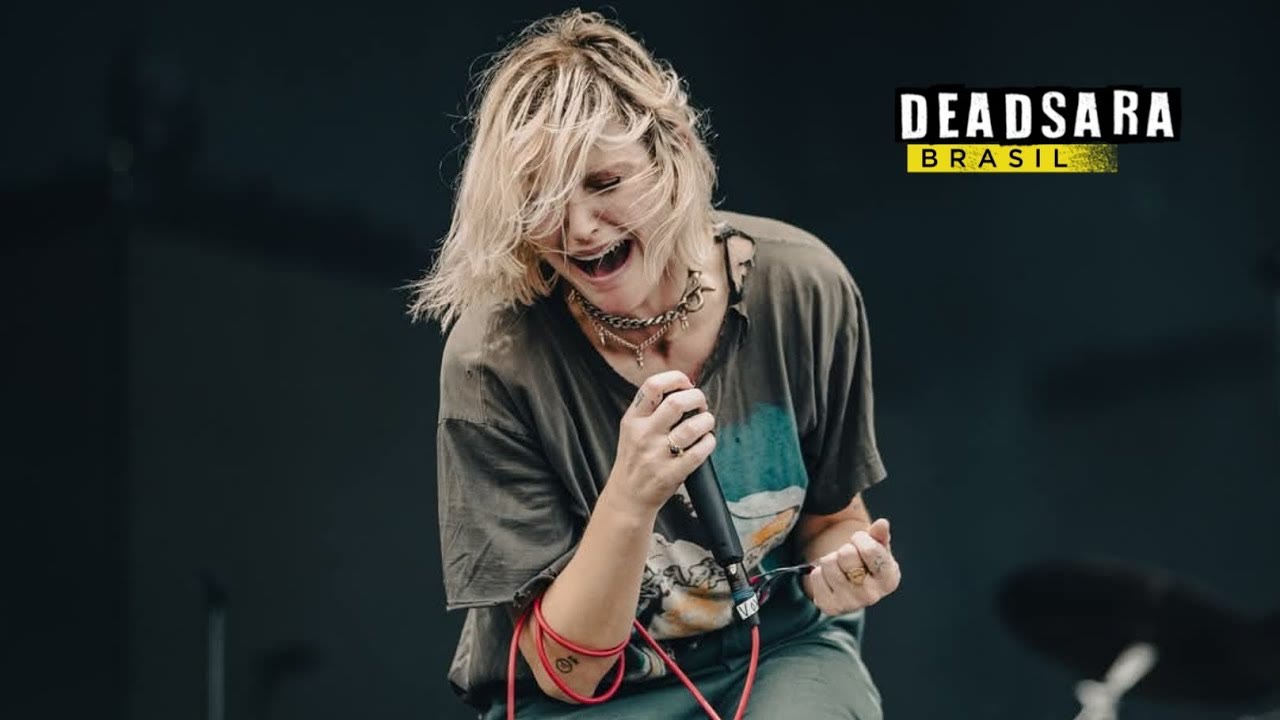
Emily Armstrong was 12 when she got her first guitar. In a Loudwire interview published in 2012, she described the instrument as the beginning of an obsession: she started putting bands together at school because making music was “the only time I was ever happy.” That sentence explains more about Armstrong’s career than any later headline. She didn’t enter rock as a singer looking for a band. She built the band first, then grew into the voice it needed.
Armstrong grew up in Los Angeles, where she met guitarist Siouxsie Medley during her teenage years. The pair began writing together and formed the group that eventually became Dead Sara. Their early work included the six-song “The Airport Sessions” EP in 2008, followed by the self-titled “Dead Sara” in 2012. By then, Armstrong was singing, playing rhythm guitar and writing lyrics, while Medley supplied the lead-guitar attack that gave the band its hard, open-throated charge.
The name Dead Sara came from Fleetwood Mac’s “Sara”, a song Armstrong and Medley admired alongside the work of Stevie Nicks. Armstrong later told The Untitled Magazine in 2016 that Nicks had been “a huge influence” during her teenage years. That influence sat beside the rougher instincts of punk, grunge and classic hard rock. Dead Sara’s early songs carried the tension of a young band trying to make every section hit with the same force as its live set.
Armstrong’s vocal style arrived through that physical process. She sang from inside the arrangements, pushing against Medley’s guitar rather than floating above it. On the 2012 debut, produced by Noah Shain, “Weatherman ↗” became the clearest introduction: a compact, radio-ready song driven by a sharp guitar figure and Armstrong’s ability to move from controlled phrasing into a full rasp without losing the melody. The album’s lyrics were written by Armstrong, while the music came from the group.
Dead Sara’s rise came through touring as much as recordings. The band supported Chevelle and The Used, played the 2012 Vans Warped Tour and appeared at the Sunset Strip Music Festival, where Armstrong performed “Soul Kitchen ↗” with members of The Doors. The debut also led to television exposure and the 2015 video-game soundtrack cover of Nirvana’s “Heart-Shaped Box ↗”, which won a NAVGTR award for Best Song, Original or Adapted.
Dead Sara gave her room to push
The 2015 album “Pleasure to Meet You” kept Dead Sara’s core intact while widening the songwriting. Noah Shain returned as producer, and the record reached No. 2 on Billboard’s Heatseekers chart. Armstrong and Medley remained the creative centre: one supplied the voice and rhythm guitar, the other the lead guitar and backing vocals. Their partnership worked because it left space for friction. Armstrong could sound exposed, abrasive or wounded within the same song, while Medley’s playing gave the arrangements a harder edge.
Dead Sara slowed down after that album. The six-song EP “Temporary Things Taking Up Space” arrived in 2018, followed by the standalone track “Hands Up” in 2020 and the album “Ain’t It Tragic” in 2021. Sean Friday co-produced “Ain’t It Tragic” with Shain, who had also worked on the first two full-lengths. In a 2021 interview with Hollywood Life, Armstrong said the band’s writing process had changed during the period around the 2018 EP, when they began paying closer attention to songwriting and structure.
That experience mattered when Linkin Park entered her life. Armstrong had spent two decades learning how to occupy a song without sanding away its rough edges. She knew how to sing over a guitar band, how to write lyrics that held up in a crowded room and how to make a vocal sound immediate without relying on studio polish. Her work with Dead Sara also meant she had already lived through the specific demands placed on women in heavy rock: the scrutiny of her voice, her stage presence and her authority within a band.
By the time Linkin Park began working toward a return, Armstrong had already met some of its members through writing sessions. Mike Shinoda told Billboard in 2024 that the band had encountered Armstrong around 2019 and worked with her intermittently before the group had a clear plan. The sessions gained direction as songs began to form. When the old members started creating music again, Shinoda said calling it anything other than Linkin Park would have been “strange and misleading.”
Armstrong’s involvement developed gradually. She was initially one of several singers and musicians brought into the creative process. In a 2024 interview discussed by Loudwire, Shinoda recalled the moment he began considering her as a possible lead voice for the band rather than a guest contributor. The decision carried consequences far beyond the studio. Linkin Park’s last album with Chester Bennington, “One More Light”, had been released in May 2017; Bennington died by suicide two months later, aged 41.
Chester’s shadow and her own voice
Armstrong knew the catalogue before she joined the band. She had listened to “Hybrid Theory” as a teenager and described the album’s impact in a 2024 conversation with Zach Sang. For someone who had grown up with Linkin Park, singing “Crawling ↗”, “In the End ↗” or “What I’ve Done” meant stepping into songs that already belonged to millions of people.
In the documentary “Linkin Park: Unshatter”, Armstrong speaks openly about that fear. She told People in 2026 that she questioned whether she was capable of singing the songs because listeners knew them so intimately.
You see it in the documentary where I’m just like, “Am I even cut out for this?” You’re trying to give yourself every reason to just be like, “You’re not good. Everybody knows these songs.”
- Emily Armstrong, People (2026).
Her answer came through the way she approached the old material. Armstrong has said that nobody could replace Bennington and that her task was to create the same emotional impact for listeners while using her own voice. That distinction guided the early shows. She wasn’t attempting an imitation of Bennington’s tone, phrasing or personal history. She had to sing the songs as a musician who had inherited them from the audience as much as from the band.
Linkin Park adjusted the material around her. In an interview connected to “Unshatter”, the band explained that it changed keys several times to find arrangements Armstrong could sing comfortably. Those changes were practical, yet they also gave the performances a different shape. The older songs had to survive contact with a new vocalist whose power came from a rougher, more exposed attack than a conventional arena-rock delivery.
The first public proof arrived on 5 September 2024, when Linkin Park introduced Armstrong and drummer Colin Brittain during a livestreamed performance in Los Angeles. The band opened with “The Emptiness Machine ↗”, a new song that established the division between Shinoda’s measured verses and Armstrong’s increasingly forceful choruses. AP described her performance as recalling Bennington’s intensity without turning into parody.
“The Emptiness Machine” also gave Armstrong a role that existed inside Linkin Park’s established design. Shinoda starts the song, setting up its restless, clipped momentum. Armstrong arrives later and changes the pressure of the arrangement. Her entrance brings a heavier vocal presence, then the two voices converge as the track moves toward its closing section. In an interview about the song, Shinoda said Armstrong’s vocal in the bridge showed the band what could happen when her voice was placed inside their existing songwriting process.
The song became the biggest rock song of 2024, according to Linkin Park’s official biography, while “From Zero” reached No. 1 in 14 countries. “Heavy Is the Crown ↗” followed as another crucial test. Produced by Shinoda with co-production from Colin Brittain and Brad Delson, the track also features additional production from Mike Elizondo, programming by Joe Hahn and vocals from both Armstrong and Shinoda.
“Heavy Is the Crown” placed Armstrong in a more openly aggressive setting. Its compact running time leaves little room for vocal hesitation. The song moves through Shinoda’s rap-led sections into Armstrong’s hard-edged refrains, then drives toward a final passage where the band’s guitars, drums and electronic programming all tighten around her. The vocal works because Armstrong attacks the melody with the same instinct she developed in Dead Sara: she treats the chorus as a physical event rather than a polished display.
Donington, 14 June 2026
Linkin Park’s 2026 Download Festival headline performance gave Armstrong the largest public test of her career. On 14 June 2026, the band closed the festival at Donington Park with a 23-song set spanning “From Zero”, “Hybrid Theory”, “Meteora”, “Minutes to Midnight”, “The Hunting Party” and “One More Light”. The performance drew an estimated 95,000 people and made Linkin Park the first band with a female singer to headline Download.
The set carried the obvious weight of history. Linkin Park’s previous Download headline appearance had come in 2014, before Bennington’s death and before the band’s seven-year break from new music. Armstrong walked onto the same festival stage with the catalogue’s most recognisable songs waiting for her, alongside two years of debate about whether the group could continue.
The response at Donington was measured through participation. Metal Hammer reported that the set drew some of the loudest singalongs of the weekend, including the songs from “From Zero”. NME’s published setlist included “The Emptiness Machine”, “Heavy Is the Crown”, “Crawling”, “Numb”, “In the End”, “Faint ↗” and “What I’ve Done”. The newer songs sat inside the older catalogue without being treated as introductions to a tribute act.
Mike Shinoda addressed the significance of Armstrong’s position from the stage. She had become Download’s first female headliner in the festival’s 23-year history, a fact Armstrong herself had been reluctant to foreground. The achievement mattered because the festival had spent decades giving its headline slots to male-fronted rock and metal acts, while women had often appeared lower on the bill or as guest vocalists.
The performance also showed how Armstrong had learned to manage the difference between Dead Sara’s rooms and Linkin Park’s stadium scale. With Dead Sara, her body and voice often seemed to collide with the song. At Donington, she had to project across an enormous field while leaving room for Shinoda, the band’s visual production and the crowd’s own singing. The job required control as much as force.
Where she stands now
Armstrong’s Linkin Park role has settled into a partnership rather than a simple replacement. Shinoda remains the band’s other vocalist, songwriter and producer. Armstrong sings the new songs, contributes to the group’s writing and performs the older catalogue with arrangements shaped around her range. Brittain’s arrival also changed the rhythmic centre of the band, giving the revived lineup its own internal movement.
“From Zero” gave Armstrong a formal introduction, yet her identity in the band has continued to develop through performance. “The Emptiness Machine” showed how she could enter Linkin Park’s established vocal architecture. “Heavy Is the Crown” gave her a song built around attack and momentum. The older tracks demanded restraint, memory and respect for voices that audiences still hear in their heads.
The 2026 documentary “Unshatter” places that process on record, following the band’s uncertainty after Bennington’s death, the return to writing and the decision to bring Armstrong into the lineup. AP reported that the film includes early recording footage, conversations and experiments that preceded the reunion announcement. Armstrong’s presence in the film gives the story its human scale: a singer who had spent years fronting her own band suddenly found herself judged against one of the most recognisable vocalists in modern rock.
Her history with Dead Sara remains part of the answer. Armstrong learned to write with Medley, learned to lead from the guitar and learned to trust a voice that could turn abrasive without losing its centre. She carried those habits into Linkin Park, where the pressure was larger and the audience knew every word.
On 14 June 2026, she stood at Donington and sang the songs anyway. The set ended with “Faint”, closing a 23-song performance that connected the Dead Sara years, the post-Bennington uncertainty and Linkin Park’s current lineup in one night.